
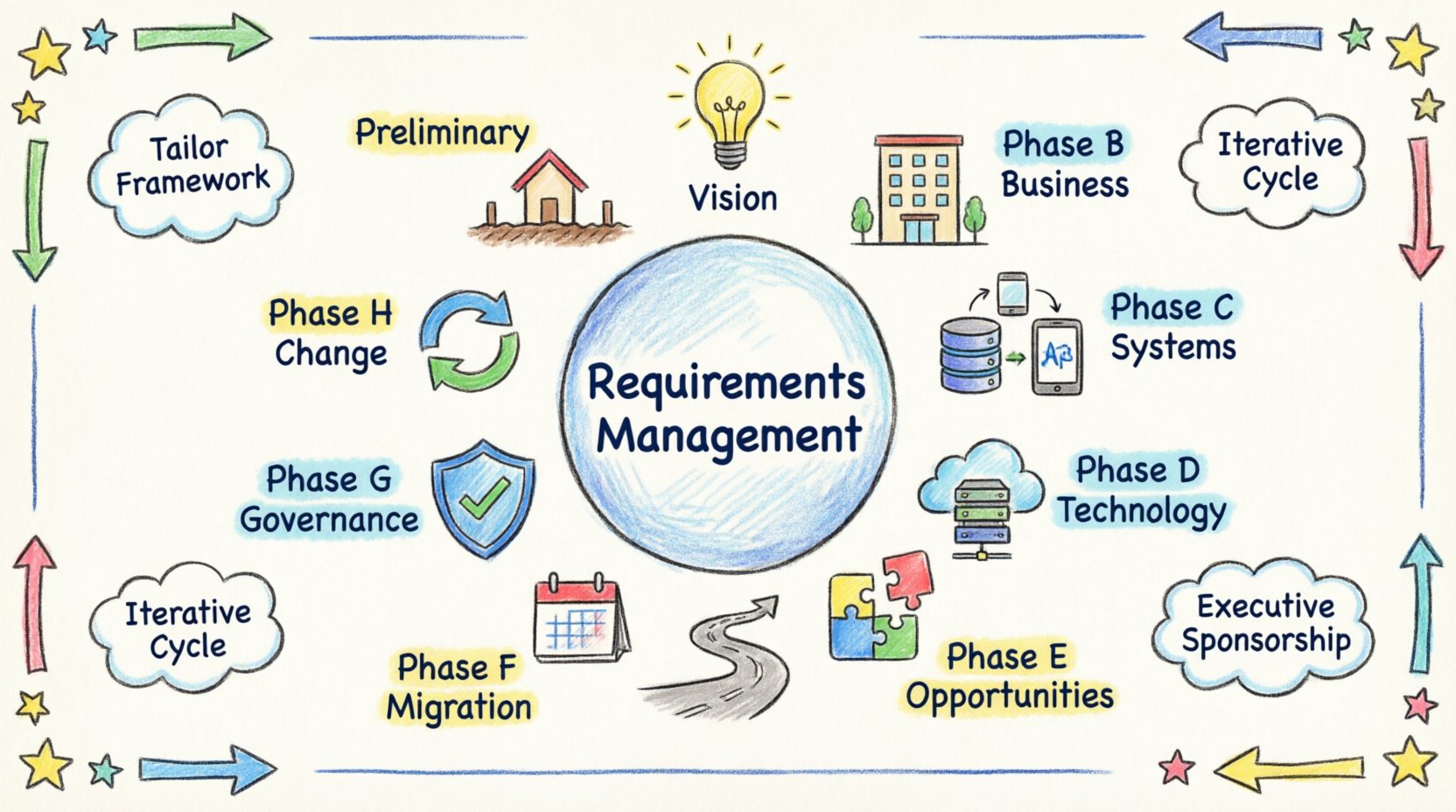
Enterprise architecture requires a structured approach to navigate complex organizational landscapes. The TOGAF Architecture Development Method (ADM) serves as a proven framework for designing, planning, implementing, and governing enterprise information architecture. Implementing this method effectively ensures alignment between business strategy and IT capabilities. This guide outlines the specific steps required to operationalize the ADM within your organization.
🏗️ Understanding the Foundation: The Preliminary Phase
Before diving into specific architecture cycles, organizations must establish the context. The Preliminary Phase sets the stage for success by defining the architecture framework itself. This is not a one-time event but a foundational activity that determines how the rest of the work proceeds.
- Define the Architecture Capability: Determine the maturity level of your architecture practice. Are you building from scratch, or refining an existing function?
- Tailor the Framework: The standard framework must be adapted to fit the specific needs, culture, and constraints of the organization.
- Identify Stakeholders: Map out who holds decision-making power and who is affected by architectural decisions.
- Establish Principles: Create high-level rules that guide technology and design choices across the enterprise.
This phase ensures that the team speaks the same language and understands the boundaries of their authority. Without this groundwork, subsequent phases often suffer from misalignment or scope creep.
🔄 The Core ADM Cycle: Phases Explained
The Architecture Development Method consists of a series of phases designed to be iterative. Each phase produces specific outputs that feed into the next. The cycle is anchored by Requirements Management, which runs through all phases to ensure consistency.
📋 Phase A: Architecture Vision
The initial step focuses on defining the scope and objectives of the architecture project. It involves creating a high-level vision that stakeholders can agree upon.
- Identify Drivers: Understand the business drivers forcing the change. Is it regulatory, cost-driven, or innovation-focused?
- Define Scope: Clearly outline what is included in the current architecture project and what is excluded.
- Obtain Sponsorship: Secure formal commitment from senior leadership to support the initiative.
- Create the Statement of Architecture Work: Document the agreed-upon scope, timeframes, and resources.
🏢 Phase B: Business Architecture
This phase translates the business vision into a business architecture. It describes the structure of the business and its processes.
- Analyze Business Strategy: Review the organizational strategy to ensure architectural decisions support long-term goals.
- Map Business Processes: Document current state processes and identify gaps in the future state.
- Define Organization Structure: Align the architecture with the organizational hierarchy and governance models.
- Identify Business Functions: Determine which functions are critical to service delivery.
💾 Phase C: Information Systems Architectures
This phase is divided into two sub-domains: Data Architecture and Application Architecture.
🗄️ Data Architecture
- Define the logical and physical data assets.
- Establish data governance policies.
- Map data flows between business processes.
📱 Application Architecture
- Define the application landscape and interactions.
- Identify necessary application services.
- Plan for application integration and interoperability.
🌐 Phase D: Technology Architecture
Technology architecture describes the hardware, software, and network infrastructure required to support the data and application layers.
- Define Technical Standards: Select standards for hardware, operating systems, and network protocols.
- Design Infrastructure: Plan the physical and logical infrastructure needed for deployment.
- Assess Risks: Evaluate technical risks associated with the proposed infrastructure.
- Security Considerations: Ensure security controls are embedded into the technology design.
🤝 Phase E: Opportunities and Solutions
Once the target architectures are defined, this phase moves from design to execution planning. It involves analyzing the gaps between the baseline and the target.
- Conduct Gap Analysis: Compare current state capabilities against future requirements.
- Define Work Packages: Break down the transformation into manageable projects.
- Assess Implementation Risk: Evaluate the feasibility of proposed solutions.
- Develop Implementation Roadmap: Sequence the work packages logically.
🗓️ Phase F: Migration Planning
Migration planning focuses on creating a detailed plan for moving from the baseline to the target architecture.
- Implement Prioritization: Determine which projects deliver the most value first.
- Resource Allocation: Assign budgets and personnel to specific work packages.
- Coordinate Planning: Ensure different work packages do not conflict with each other.
- Develop Detailed Schedules: Create timelines for each phase of the transition.
🛡️ Phase G: Implementation Governance
During the actual build and deployment phases, this phase ensures that the architecture is followed.
- Monitor Compliance: Check projects against the defined architecture.
- Manage Deviations: Handle cases where projects must deviate from the plan and document the impact.
- Conduct Architecture Reviews: Hold formal review meetings at key decision points.
- Ensure Alignment: Verify that implementation results match the architectural vision.
🔁 Phase H: Architecture Change Management
Architecture is not static. This phase ensures the architecture evolves as the business environment changes.
- Monitor Changes: Track external factors like market shifts or new regulations.
- Assess Impact: Determine how changes affect the current architecture.
- Initiate Updates: Start a new ADM cycle if significant changes are required.
- Maintain Documentation: Keep the architecture repository up to date.
📊 Summary of ADM Phases
| Phase | Key Output | Focus Area |
|---|---|---|
| Preliminary | Architecture Principles | Framework Setup |
| A: Vision | Statement of Architecture Work | Scope & Goals |
| B: Business | Business Architecture | Processes & Org |
| C: Systems | Data & Application Architecture | Information & Apps |
| D: Technology | Technology Architecture | Infrastructure |
| E: Opportunities | Implementation Plan | Gap Analysis |
| F: Migration | Migration Plan | Project Scheduling |
| G: Governance | Compliance Reports | Implementation Oversight |
| H: Change | Architecture Updates | Evolution & Maintenance |
⚠️ Common Implementation Challenges
Organizations often struggle when adopting the Architecture Development Method. Understanding these pitfalls helps in avoiding them.
- Over-Engineering: Creating detailed models that are too complex to maintain. Keep artifacts practical and useful.
- Lack of Stakeholder Engagement: If business leaders do not participate, the architecture will lack relevance.
- Rigid Adherence: Treating the method as a strict checklist rather than an iterative guide. Adapt the cycle to the project size.
- Documentation Overload: Focusing on writing documents rather than making decisions. Prioritize decision records over verbose reports.
- Ignoring Requirements Management: Forgetting to track requirements leads to scope drift. Maintain a central requirements repository.
🤝 Critical Success Factors
To successfully implement the TOGAF Architecture Development Method, specific conditions must be met. These factors contribute to a sustainable architecture practice.
- Executive Sponsorship: Senior leaders must champion the architecture function and allocate necessary resources.
- Skilled Personnel: Invest in training for architects to ensure they understand both the framework and the business domain.
- Integrated Tools: Use appropriate repositories to store models and documents, ensuring accessibility and version control.
- Iterative Approach: Recognize that architecture is a journey. Small, incremental improvements are better than large, infrequent overhauls.
- Communication: Translate technical architecture decisions into business value. Speak the language of the stakeholders.
📈 Measuring Success
Quantifying the value of architecture implementation is essential for continued support. Consider the following metrics:
- Project Delivery Rates: Track the percentage of projects delivered on time and within budget after architecture sign-off.
- System Integration Costs: Monitor the reduction in integration costs due to standardized interfaces.
- Requirement Coverage: Measure the percentage of business requirements traced to architectural components.
- Compliance Adherence: Track the number of deviations found during implementation governance reviews.
- Time-to-Market: Evaluate if architectural standardization has reduced the time required to launch new services.
🛠️ Integrating Requirements Management
Requirements Management acts as the central hub of the ADM. It ensures that every architectural decision is traced back to a specific business need.
- Collection: Gather requirements from all sources, including users, regulators, and system logs.
- Analysis: Group requirements by category and priority.
- Allocation: Assign requirements to specific architecture domains (Business, Data, Application, Technology).
- Verification: Ensure that the final solution meets the original requirements.
By maintaining a live requirements repository, teams can easily trace the impact of a change request. If a requirement is removed, the system can identify which architecture components are no longer needed.
🔄 The Iterative Nature of the ADM
The Architecture Development Method is not linear. Teams often loop back to previous phases as new information emerges.
- Refining the Vision: As Phase B reveals more about business processes, Phase A may need adjustment.
- Updating Technology: New technology options discovered in Phase D might require a re-evaluation of Phase C.
- Revisiting Migration: If a work package in Phase E encounters delays, Phase F must be updated.
This flexibility is a strength, not a weakness. It allows the architecture to remain responsive to changing conditions without losing its structural integrity.
🧩 Tailoring the Framework
One size does not fit all. Organizations must tailor the framework to their specific context.
- Small Projects: Use a lightweight version of the ADM. Focus on Phase A, B, and D, skipping detailed migration planning if the scope is small.
- Large Enterprises: Utilize the full cycle with multiple work streams running in parallel.
- Agile Environments: Integrate architecture sprints with development sprints. Ensure architecture reviews happen at the end of each sprint.
📝 Final Thoughts on Implementation
Implementing the TOGAF Architecture Development Method is a significant undertaking that requires patience and discipline. It transforms how an organization views its technology and business capabilities. By following the steps outlined, focusing on stakeholder engagement, and maintaining a flexible approach, organizations can build a robust architecture function.
The goal is not to create perfect documentation, but to enable better decision-making. When the architecture practice is embedded into the daily workflow, it becomes a strategic asset rather than an administrative burden. Continuous learning and adaptation are key to sustaining the practice over time.
Success comes from consistent application of the method, regular reviews, and a commitment to transparency. As the organization grows, the architecture function must grow with it, ensuring that the infrastructure supports future ambitions while maintaining stability in the present.