
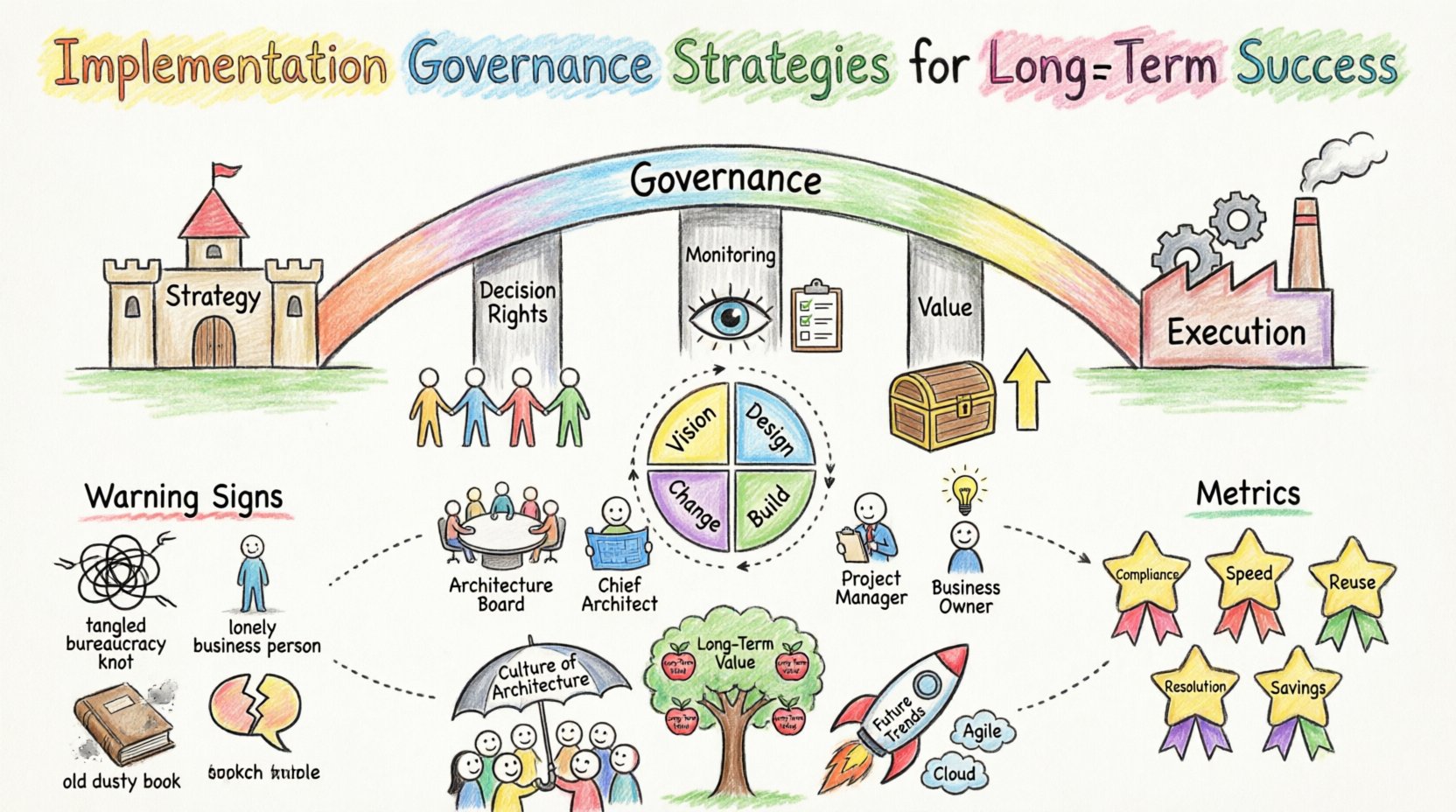
Enterprise architecture is not merely a blueprint; it is the operating system for business transformation. Without robust governance, even the most sophisticated designs risk becoming obsolete documents sitting on a shelf. Implementation governance ensures that the vision defined during strategic planning translates into tangible reality. In the context of the TOGAF framework, governance acts as the bridge between high-level architecture and day-to-day execution. This guide explores the essential strategies required to maintain alignment, ensure compliance, and drive value over time.
Success in this domain does not happen by accident. It requires a deliberate structure, clear accountability, and a continuous feedback loop. Organizations that neglect governance often face technical debt, duplicated efforts, and misaligned investments. Conversely, those that implement strong frameworks find agility, reduced risk, and better resource allocation. We will examine the core components of an effective governance model, focusing on practical application rather than theoretical abstraction.
🔍 Understanding the Governance Landscape in TOGAF
The TOGAF standard provides a comprehensive methodology for developing enterprise architecture. Within this methodology, governance is not an afterthought; it is embedded throughout the Architecture Development Method (ADM). The primary objective is to ensure that the architecture delivers the intended business value. This involves monitoring compliance, managing changes, and facilitating decision-making.
Effective governance requires distinguishing between oversight and operational management. Oversight involves setting standards and policies, while management involves the daily activities that adhere to those policies. An Architecture Board often serves as the central body for oversight. This group consists of senior stakeholders who represent business, technology, and risk functions. Their role is to review proposals, resolve conflicts, and approve architectural artifacts.
Key elements of the TOGAF governance model include:
- Architecture Principles: High-level guidelines that inform decision-making. These principles act as the non-negotiable rules of engagement.
- Compliance Management: The process of verifying that projects and solutions adhere to established standards.
- Architecture Requirements: Specific needs derived from business drivers that must be met by the solution.
- Risk Management: Identifying and mitigating risks associated with architectural decisions.
🛡️ Core Pillars of Governance Strategy
To achieve long-term success, governance must rest on solid foundations. These pillars provide the stability needed to withstand market shifts and technological changes. Without them, the structure becomes fragile and prone to collapse under pressure.
1. Decision Rights and Accountability
One of the most common points of failure is ambiguity regarding who has the authority to make decisions. When multiple parties believe they hold the power to approve changes, bottlenecks occur. A clear governance model defines specific roles and their corresponding responsibilities. This clarity ensures that the right people are involved at the right time. It prevents decisions from being made in silos and ensures cross-functional alignment.
Accountability must be paired with authority. Individuals empowered to make decisions must also be held responsible for the outcomes. This creates a culture of ownership where stakeholders are invested in the success of the architecture. Regular reviews of decision logs can help identify patterns where authority was unclear or misused.
2. Continuous Monitoring and Compliance
Governance is not a one-time event; it is a continuous activity. Projects evolve, and so do the requirements. Continuous monitoring ensures that deviations from the architecture are identified early. Compliance checks should be integrated into the project lifecycle rather than treated as a final hurdle. This proactive approach prevents costly rework and ensures that the final deliverable matches the architectural intent.
Automated tools can assist in this process, but the human element remains critical. Audits should be conducted regularly to verify adherence to principles. These audits serve not only to enforce rules but to improve them. If a principle is consistently violated, it may indicate that the principle is outdated or impractical.
3. Value Realization
The ultimate goal of architecture is to deliver value. Governance strategies must focus on measuring outcomes rather than just outputs. This means tracking metrics that reflect business performance improvements, cost savings, or efficiency gains. If an architecture initiative does not contribute to these metrics, its justification is weakened.
Regular benefit realization reviews should be scheduled after major implementations. These reviews assess whether the expected benefits were actually achieved. If there is a gap between expectation and reality, the governance framework needs to adjust its assumptions. This feedback loop is essential for maintaining credibility with business leaders.
📊 Structuring the Governance Model
Organizations often struggle to visualize how governance fits into their structure. A tabular approach can help clarify the distribution of duties and responsibilities. The following table outlines a typical governance structure within an enterprise environment.
| Role | Primary Responsibility | Authority Level | Key Deliverable |
|---|---|---|---|
| Architecture Board | Strategic oversight and conflict resolution | High (Approval/Rejection) | Architecture Decision Records |
| Chief Architect | Technical direction and standards enforcement | Medium (Advisory/Recommendation) | Architecture Roadmaps |
| Project Manager | Execution of architectural requirements | Low (Execution Only) | Compliance Reports |
| Business Owner | Defining business needs and benefits | Medium (Requirement Approval) | Business Case Documents |
This structure ensures that no single entity holds excessive power while maintaining clear lines of communication. It also highlights the interdependence between technical teams and business stakeholders. Governance is a collaborative effort, not a policing mechanism.
🔄 Integrating Governance with the ADM Cycle
The Architecture Development Method (ADM) provides a cyclical process for architecture development. Governance activities must be woven into each phase of this cycle to ensure consistency. Ignoring governance during the early phases often leads to rework in later stages.
Phase A: Architecture Vision
At the start, governance sets the scope and boundaries. The Architecture Board defines the context for the project. This includes identifying stakeholders and establishing the initial set of principles. Clear boundaries prevent scope creep and ensure resources are focused.
Phase B to D: Business, Information Systems, and Technology Architecture
During the design phases, governance ensures that the proposed architecture aligns with the vision. Reviews should be conducted at key milestones. If a design deviates from the principles, it must be corrected before proceeding. This stage is critical for maintaining technical integrity.
Phase E to H: Opportunities, Migration, Implementation, and Change Management
This is where the rubber meets the road. Governance shifts from design to compliance. Implementation projects must adhere to the agreed-upon architecture. Change management processes ensure that modifications to the system are evaluated for architectural impact. Any deviation requires formal approval from the Architecture Board.
Phase A: Architecture Change Management
The cycle does not end. As the business environment changes, the architecture must evolve. Governance mechanisms allow for controlled updates to the architecture. This ensures that changes are documented, approved, and communicated effectively.
📈 Measuring Success: Metrics and KPIs
Without measurement, improvement is impossible. Governance strategies must include specific Key Performance Indicators (KPIs) to track effectiveness. These metrics should be quantitative where possible to provide objective data.
Common metrics for implementation governance include:
- Compliance Rate: The percentage of projects that fully adhere to architectural standards.
- Time to Approval: How long it takes for the Architecture Board to review and approve a design.
- Architecture Reuse: The extent to which existing components are utilized rather than building new ones.
- Issue Resolution Time: The average time taken to resolve architectural conflicts or non-compliance findings.
- Cost Avoidance: Estimated savings from avoiding redundant systems or poor design choices.
Tracking these metrics over time reveals trends. A rising compliance rate indicates that the organization is maturing. A decreasing time to approval suggests that the governance process is becoming more efficient. If metrics show stagnation, the governance model itself may need refinement.
⚠️ Common Pitfalls and How to Avoid Them
Even well-intentioned governance programs can fail due to common mistakes. Recognizing these pitfalls early allows organizations to steer clear of them. The following list highlights frequent challenges and practical solutions.
Bureaucracy and Bottlenecks
When governance becomes too rigid, it slows down delivery. Teams may feel stifled and look for ways to bypass the process. To avoid this, governance should be lean. Focus on high-risk decisions and allow lower-risk changes to proceed with minimal friction. Self-service portals for standard requests can reduce the load on the Architecture Board.
Lack of Business Engagement
Architecture is often seen as an IT issue, but it impacts the entire business. If business leaders are not engaged, governance lacks the authority to enforce decisions. Involve business stakeholders in the Architecture Board. Ensure that architectural decisions are linked to business outcomes. This alignment makes the value of governance clear.
Outdated Standards
Standards that were relevant five years ago may be obsolete today. If the governance framework does not evolve, it becomes a hindrance. Establish a regular review cycle for all principles and standards. Solicit feedback from the development community to ensure standards are practical and current.
Poor Communication
Complex architecture decisions can be difficult to explain to non-technical stakeholders. If the rationale is not communicated clearly, resistance grows. Use visualizations and simplified language to explain architectural decisions. Documentation should be accessible and searchable. Transparency builds trust.
🚀 Sustaining Long-Term Value
Implementing governance is a journey, not a destination. The landscape of technology and business changes constantly. Strategies must be adaptable to remain effective. Sustainability requires a commitment to continuous learning and improvement.
Organizations should invest in training for their architects and project managers. Understanding the “why” behind governance helps teams embrace it rather than resist it. When people understand the value, compliance becomes a natural part of their workflow.
Feedback mechanisms are essential. Regular surveys and retrospectives can capture the sentiment of the workforce. If the governance process is perceived as helpful, adoption rates will increase. If it is seen as a barrier, friction will increase.
Finally, leadership support is crucial. Governance initiatives require resources and time. Without executive backing, these initiatives often lose momentum. Leaders must champion the governance framework and hold teams accountable for adherence. This top-down support signals that architecture is a strategic priority.
🔮 Looking Ahead: Future Trends in Governance
The field of enterprise architecture is evolving. New trends are emerging that will shape how governance is practiced in the coming years. Staying informed about these trends helps organizations prepare for the future.
Agile Governance:
Traditional governance often clashes with agile methodologies. Agile governance seeks to integrate oversight into iterative cycles. This approach allows for faster feedback and adaptation. It requires a shift from gatekeeping to enabling.
Data-Driven Decision Making:
Analytics will play a larger role in governance. Real-time data on system performance and project health will inform architectural decisions. This reduces reliance on intuition and increases the accuracy of predictions.
Cloud and Hybrid Environments:
As organizations move to the cloud, governance models must adapt to distributed environments. Policies need to cover cloud-specific risks, such as data residency and vendor lock-in. Governance frameworks must be flexible enough to handle hybrid infrastructures.
🤝 Building a Culture of Architecture
Ultimately, the success of implementation governance depends on culture. A culture where architecture is valued encourages voluntary compliance. Employees should feel empowered to speak up when they see potential issues. This culture is built on trust and shared goals.
Leadership plays a pivotal role in shaping this culture. By modeling good behavior and rewarding compliance, leaders set the tone for the organization. Architecture should be seen as a service that enables success, not a hurdle to overcome.
Collaboration is key. Architects, developers, and business units must work together. Silos create blind spots that governance cannot fix. Breaking down these silos requires open communication and shared platforms. When everyone works toward the same vision, governance becomes a natural part of the ecosystem.
By focusing on these strategies, organizations can build a resilient governance framework. This framework will support long-term success and adapt to future challenges. The investment in governance pays dividends in reduced risk and improved efficiency. It is a foundational element for any enterprise aiming for sustainable growth.