
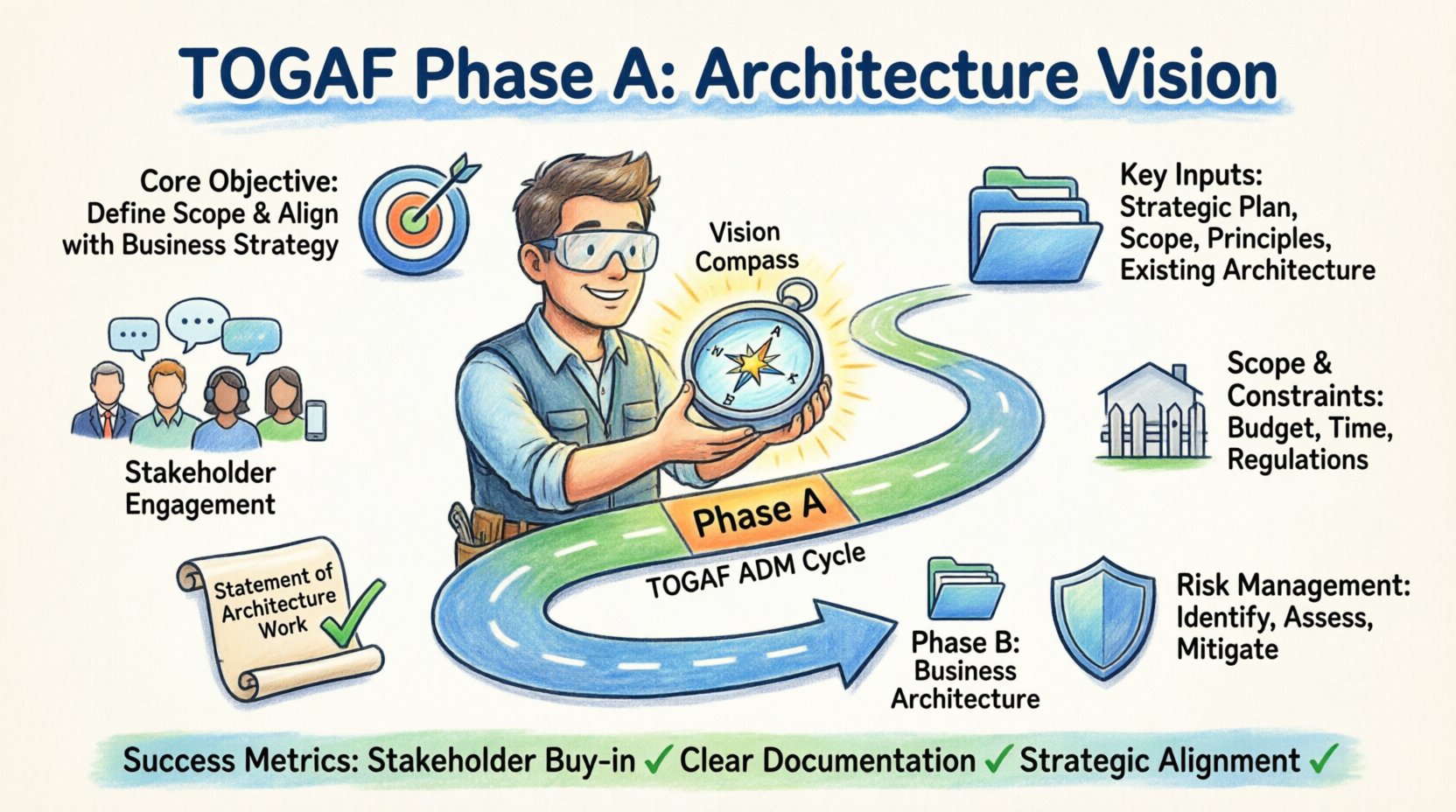
Enterprise architecture demands precision, structure, and a clear roadmap. Within the TOGAF framework, the Architecture Development Method (ADM) provides the backbone for this process. Phase A serves as the critical foundation. It sets the stage for all subsequent work. Without a solid Architecture Vision, later phases lack direction. This guide details the execution of Phase A, focusing on practical application and strategic alignment.
🎯 Understanding the Core Objective of Phase A
Phase A, officially known as Architecture Vision, is the starting point of the ADM cycle. Its primary purpose is to define the scope and constraints of the architecture project. It ensures that the architecture effort aligns with business strategy. This phase is not merely administrative; it is strategic.
Key objectives include:
- Establishing the Vision: Defining what the architecture aims to achieve for the organization.
- Identifying Stakeholders: Recognizing who influences or is influenced by the project.
- Securing Approval: Gaining authorization to proceed to the next phases.
- Defining Constraints: Understanding budget, time, and technical limitations.
When Phase A is executed correctly, it creates a shared understanding across the enterprise. It bridges the gap between business intent and technical execution. The outcome is a documented Architecture Vision that guides the entire transformation.
📋 Key Inputs Required for Success
Before beginning work, the Architecture Team must gather specific inputs. These documents provide the context needed to formulate the vision. Relying on assumptions at this stage leads to misalignment later.
Essential inputs include:
- Strategic Business Plan: Documents outlining the organization’s direction.
- Project Scope: Boundaries of the initiative, including what is in and out of scope.
- Business Principles: The guiding rules that govern business operations.
- Existing Architecture: Current systems and processes that must be considered.
- Constraints and Issues: Known limitations that affect the project.
Reviewing these inputs ensures that the Architecture Vision is grounded in reality. It prevents the creation of theoretical solutions that cannot be implemented.
🤝 Stakeholder Management and Communication
One of the most critical activities in Phase A is identifying and engaging stakeholders. Stakeholders are individuals or groups with an interest in the architecture. Their support is vital for success.
The process involves:
- Identification: Listing all parties affected by the change.
- Analysis: Understanding their power, interest, and influence.
- Engagement: Developing a strategy to communicate with each group.
Effective stakeholder management prevents resistance. It ensures that concerns are addressed early. The following table outlines common stakeholder groups and their typical interests.
| Stakeholder Group | Typical Interests | Engagement Strategy |
|---|---|---|
| Executive Leadership | ROI, Strategic Alignment, Risk | High-level briefings, Formal Approval |
| Business Unit Heads | Operational Efficiency, Process Change | Workshops, Requirement Gathering |
| IT Management | Technical Feasibility, Integration | Technical Reviews, Architecture Boards |
| End Users | Usability, Training, Support | Surveys, Training Sessions |
Ignoring any of these groups can lead to adoption failure. The Architecture Vision must resonate with all levels of the organization.
🛡️ Defining Scope and Constraints
Scope defines the boundaries of the architecture project. It specifies which parts of the enterprise are included. Constraints define the limitations within which the architecture must operate.
Key considerations for scope:
- Business Units: Which departments are involved?
- Geography: Are there regional differences to consider?
- Timeframe: What is the expected duration of the project?
- Technology Stack: Are there mandated platforms?
Constraints often include:
- Budget: Financial limits on the initiative.
- Regulatory Requirements: Legal compliance needs.
- Legacy Systems: Existing infrastructure that must be integrated.
Clear definition of scope and constraints prevents scope creep. It keeps the project focused on delivering value within the agreed limits.
📝 The Statement of Architecture Work
This document is the primary output of Phase A. It formalizes the agreement between the Architecture Team and the Requester. It outlines the work to be performed.
Components of the Statement include:
- Project Description: A summary of the initiative.
- Scope and Constraints: Detailed boundaries.
- Stakeholders: List of involved parties.
- Timeline: Estimated schedule for phases.
- Risks: Potential issues identified early.
- Cost Estimates: Budgetary requirements.
Approval of this statement marks the transition from planning to execution. It serves as a contract for the architecture effort. Changes to this document later require formal review.
⚠️ Risks and Issues Management
Every enterprise architecture project carries risk. Phase A is the ideal time to identify and document these risks. Ignoring them at the start can lead to project failure later.
Common risks include:
- Resource Availability: Lack of skilled personnel.
- Technology Integration: Difficulty connecting new and old systems.
- Change Resistance: Staff unwillingness to adopt new processes.
- Budget Overruns: Costs exceeding the initial estimate.
For each risk, the team should define:
- Probability: How likely is it to occur?
- Impact: What is the consequence if it happens?
- Mitigation Strategy: How will the team respond?
Documenting these factors allows for proactive management. It ensures that stakeholders are aware of potential hurdles.
🔄 Transitioning to Phase B
Once the Architecture Vision is approved, the process moves to Phase B: Business Architecture. The outputs from Phase A feed directly into this next step.
The Architecture Vision informs Phase B by:
- Providing the strategic context for business modeling.
- Highlighting areas of business change.
- Establishing the principles that guide business design.
Seamless transition requires that the deliverables from Phase A are accessible and clear. The Architecture Team must ensure that the Business Architects have the necessary information to begin their work.
📊 Measuring Effectiveness
How do you know Phase A was successful? Several indicators can be used to measure effectiveness.
- Stakeholder Buy-in: Are key leaders supportive?
- Clear Documentation: Is the Statement of Architecture Work approved?
- Alignment: Does the vision match business goals?
- Risk Awareness: Are major risks identified and addressed?
Regular reviews during Phase A help ensure these metrics are met. Adjustments can be made before the project moves forward.
🚀 Common Challenges and Mitigation
Even with a structured framework, challenges arise. Recognizing common pitfalls helps the team navigate them.
1. Vague Objectives
When goals are not specific, the architecture lacks focus. Mitigation: Use SMART criteria to define objectives. Ensure they are Specific, Measurable, Achievable, Relevant, and Time-bound.
2. Overlooking Stakeholders
Missing key voices leads to resistance. Mitigation: Conduct a comprehensive stakeholder analysis early. Interview diverse groups to gather input.
3. Underestimating Complexity
Projects often take longer than planned. Mitigation: Build buffer time into the schedule. Identify technical dependencies early.
4. Ignoring Governance
Lack of oversight can lead to drift. Mitigation: Establish an Architecture Board early. Define clear governance processes.
✅ Conclusion on Execution
Phase A is the cornerstone of the TOGAF ADM cycle. It transforms business intent into an architectural mandate. By focusing on stakeholders, scope, and risks, the team sets a strong path forward. The effort invested here pays dividends in later phases.
Successful execution requires discipline and communication. It demands that the Architecture Team listens as much as they plan. When the Architecture Vision is clear, the organization can move forward with confidence. The foundation is laid. The path is defined. The work begins.