
Understanding the business landscape is a critical skill for any student pursuing studies in management, marketing, or economics. One of the most foundational frameworks used to analyze this landscape is the PEST analysis. This tool helps organizations and students alike to identify external factors that influence their operations. While the concept might sound intimidating at first, breaking it down reveals a logical structure that is easy to apply.
This guide aims to demystify the PEST framework. We will explore each component in detail, provide actionable steps, and offer real-world examples. By the end of this tutorial, you will have a clear understanding of how to conduct a PEST analysis for your academic projects or future career endeavors.
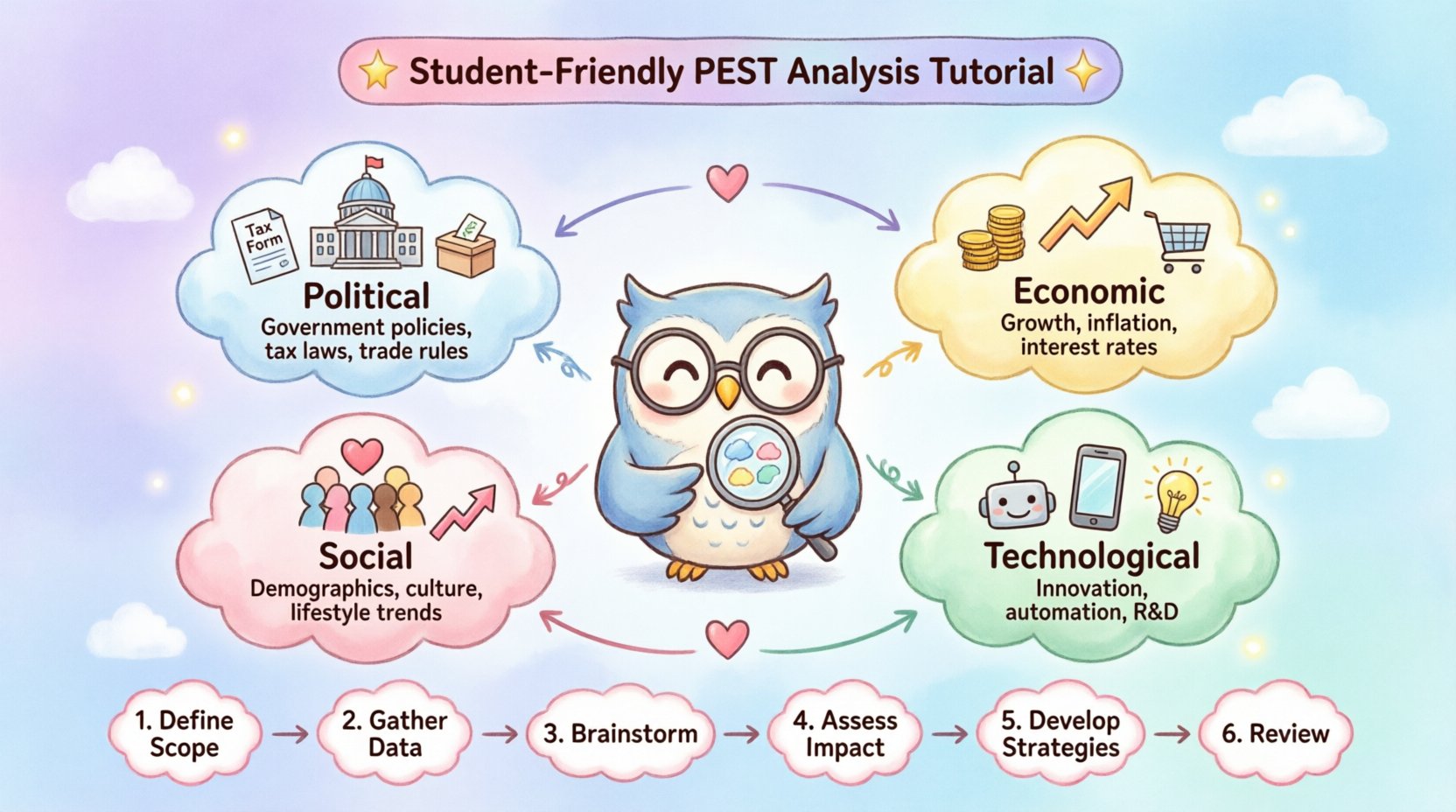
🔍 What is PEST Analysis?
PEST stands for Political, Economic, Social, and Technological. It is a strategic framework used to analyze the external macro-environmental factors that impact an organization. Unlike internal factors, which a company can control, these external forces are outside the direct influence of the business.
For students, mastering this framework is essential for case studies, business plans, and market research projects. It provides a structured way to look at the big picture. Instead of focusing solely on the product or service, PEST analysis forces you to consider the environment in which that product exists.
Here is why this framework is valuable:
- Strategic Planning: It helps in identifying opportunities and threats before they become critical issues.
- Market Entry: It assists in evaluating whether a new market is viable for expansion.
- Risk Management: It highlights potential regulatory or economic shifts that could disrupt operations.
- Competitive Advantage: Understanding these factors allows a business to adapt faster than competitors.
🏛️ The Four Core Components Explained
To use PEST effectively, you must understand what falls under each category. Sometimes, these categories overlap, but keeping them distinct helps maintain clarity during your analysis.
| Component | Key Focus Areas | Example Questions |
|---|---|---|
| Political | Government policies, tax laws, trade restrictions | How does stability affect business? Are there new tariffs? |
| Economic | Economic growth, interest rates, exchange rates | Is the economy growing? How does inflation impact costs? |
| Social | Population growth, age distribution, lifestyle trends | Is the population aging? What are the cultural norms? |
| Technological | Innovation, automation, R&D activity | Is new technology emerging? How does digitalization change the market? |
🏛️ Political Factors: The Role of Government
Political factors refer to the extent to which a government intervenes in the economy. These factors can have a direct impact on the profitability and operations of a business. When conducting a PEST analysis, you need to look at the political stability of the region and the regulatory environment.
Key political elements to consider include:
- Tax Policy: Corporate tax rates influence net profits. Changes in tax laws can alter pricing strategies.
- Employment Laws: Regulations regarding minimum wage, working hours, and worker safety affect labor costs.
- Trade Restrictions: Tariffs, quotas, and embargoes can limit market access or increase the cost of imported goods.
- Environmental Regulations: Laws concerning pollution and waste disposal require companies to invest in compliance.
- Political Stability: Unstable governments can lead to uncertainty, making long-term planning difficult.
For a student analyzing a company in a specific country, it is vital to research recent election outcomes. A change in administration often brings a shift in policy direction. For instance, a government focused on green energy might offer subsidies for renewable companies while taxing fossil fuel industries.
💰 Economic Factors: The State of the Economy
Economic factors determine the purchasing power of potential customers and the cost of capital. These factors are often cyclical and can be harder to predict than political ones. They dictate the overall health of the economy in which the business operates.
Important economic indicators to track include:
- Economic Growth: GDP growth rates indicate whether the economy is expanding or contracting. In a recession, discretionary spending usually drops.
- Interest Rates: High interest rates increase the cost of borrowing. This can discourage investment in new projects or expansion.
- Inflation Rates: Rising prices erode consumer purchasing power. Companies may need to raise prices to maintain margins.
- Exchange Rates: For businesses involved in international trade, currency fluctuations can impact profitability significantly.
- Disposable Income: The amount of income available for spending after taxes and essential bills are paid.
Consider the impact of inflation on a student project. If you are analyzing a luxury brand, high inflation might mean fewer customers. If you are analyzing a discount retailer, inflation might actually drive more customers to their shelves.
👥 Social Factors: Demographics and Culture
Social factors involve the cultural aspects of the external environment. These are often the hardest to quantify but are crucial for understanding consumer behavior. Demographics, lifestyle changes, and health consciousness all fall under this umbrella.
Key social trends to analyze include:
- Population Growth: A growing population creates a larger market, but it also increases demand for resources.
- Age Distribution: An aging population requires different products than a young, growing population.
- Health Consciousness: Trends towards organic food or fitness can disrupt traditional industries.
- Education Levels: Higher education levels often correlate with higher spending power and specific consumer preferences.
- Attitude Towards Work: Shifts towards remote work or flexible hours can impact office real estate and travel industries.
For example, the rise of remote work is a social trend that has reshaped the commercial real estate sector. Businesses need to adapt their office spaces or provide digital tools to accommodate this preference.
💻 Technological Factors: Innovation and Change
Technological factors involve the innovation and technological developments that can affect an industry. This area is often the most dynamic, with changes happening rapidly. Ignoring technological shifts can lead to obsolescence.
Essential technological aspects to evaluate include:
- Automation: The use of machines to perform tasks can reduce labor costs and increase efficiency.
- Research and Development: Investment in R&D drives innovation and keeps a company competitive.
- Internet Access: The level of internet penetration affects e-commerce potential.
- Patent Protection: Intellectual property laws protect innovations and influence competitive strategies.
- Technological Barriers: High costs of new technology can prevent smaller competitors from entering the market.
Consider the impact of artificial intelligence on customer service. Companies utilizing chatbots can handle inquiries 24/7, changing the expectations for response times. A student analyzing a retail chain must consider if they are keeping up with mobile payment technologies.
📝 Step-by-Step Guide to Conducting a PEST Analysis
Now that you understand the components, let us look at how to perform the analysis. Follow this structured approach to ensure your research is thorough and accurate.
- Define the Scope: Determine the specific industry, region, or product you are analyzing. A PEST analysis for a global tech giant differs from one for a local bakery.
- Gather Data: Collect information from credible sources. Government reports, news articles, and industry publications are excellent starting points.
- Brainstorm Factors: List potential factors under each of the four categories. Do not worry about the order at this stage.
- Assess Impact: Determine how each factor affects the business. Is it a threat or an opportunity? Rate the impact as high, medium, or low.
- Develop Strategies: Based on your findings, propose how the organization should respond. Should they mitigate risks or capitalize on opportunities?
- Review Regularly: The external environment changes. Revisit your analysis periodically to ensure it remains relevant.
When documenting your findings, use a spreadsheet or a simple document. Organize the data clearly so that stakeholders can easily understand the implications of each factor.
🌍 Real-World Examples for Students
To make these concepts concrete, let us look at how a PEST analysis might apply to specific industries.
Example 1: The Electric Vehicle Industry
- Political: Government subsidies for electric cars and bans on internal combustion engines in the future.
- Economic: Rising prices of raw materials like lithium and cobalt.
- Social: Increasing consumer awareness of climate change and sustainability.
- Technological: Improvements in battery life and charging infrastructure.
Example 2: The Coffee Shop Chain
- Political: Minimum wage increases affecting labor costs.
- Economic: Inflation impacting the price of coffee beans.
- Social: Trends towards plant-based milk alternatives.
- Technological: The adoption of mobile ordering apps and loyalty programs.
Example 3: The University Education Sector
- Political: Changes in student loan policies and funding for research.
- Economic: Budget constraints for families and international students.
- Social: Shifts in the demand for specific majors and online learning preferences.
- Technological: The integration of virtual classrooms and AI tutoring tools.
⚠️ Common Mistakes to Avoid
Even experienced analysts can make errors when using this framework. Being aware of these pitfalls will help you produce higher quality work.
- Being Too Vague: Avoid generic statements like “technology is growing.” Specify which technology and how it impacts the specific business.
- Confusing Internal and External: Do not include internal company strengths or weaknesses in a PEST analysis. That belongs in a SWOT analysis.
- Ignoring Interconnections: Factors often influence each other. For example, a technological breakthrough might be driven by political funding.
- Static Analysis: Treating the analysis as a one-time event. The environment is fluid and requires continuous monitoring.
- Lack of Data: Relying on assumptions rather than verified data can lead to flawed strategic decisions.
🔄 Expanding the Framework: PESTLE
Sometimes, the standard PEST model is not enough. In such cases, students might encounter PESTLE. This variant adds two more dimensions:
- Legal: Distinct from political, this focuses on consumer protection, health and safety, and employment laws.
- Environmental: Focuses on ecological aspects, climate change, and waste management.
While PEST is sufficient for many general business analyses, PESTLE is often preferred when environmental regulations or legal compliance are central to the industry.
💡 Tips for Academic Success
Using PEST analysis in your academic work can demonstrate a high level of critical thinking. Here are some tips to ensure your assignments stand out.
- Be Specific: Tailor the factors to the specific company or industry you are studying.
- Cite Sources: Always reference where you found your data to maintain academic integrity.
- Visualize: Use charts or graphs to present your data where possible.
- Connect to Strategy: Don’t just list factors. Explain how they influence the strategic direction of the business.
- Use Current Data: Ensure your information is up-to-date. Old data can mislead the analysis.
By following these guidelines, you will produce a robust analysis that adds value to your studies. The ability to analyze macro-environmental factors is a transferable skill that will serve you well in your professional life.
📊 Summary of Key Takeaways
Successfully applying the PEST framework requires attention to detail and a broad understanding of the world. It is not just about listing factors; it is about understanding the relationships between them.
- Political factors shape the regulatory landscape.
- Economic factors dictate purchasing power and costs.
- Social factors influence consumer behavior and demographics.
- Technological factors drive innovation and efficiency.
Combining these insights allows for a comprehensive view of the market. Whether you are launching a startup or analyzing a legacy corporation, this tool provides the necessary context for decision-making.
Remember that the goal is not to predict the future perfectly, but to prepare for it. By regularly reviewing these factors, you can stay ahead of trends and mitigate risks effectively.