Enterprise Architecture (EA) serves as the strategic blueprint for how an organization aligns its IT infrastructure, business processes, and data assets. It is not merely a documentation exercise; it is a discipline of governance and decision-making. While frameworks like the TOGAF Standard provide a robust structure for this work, many initiatives stumble before reaching maturity. The gap between theoretical design and practical implementation often leads to wasted resources, missed deadlines, and strategic drift.
This guide explores the common obstacles that derail architecture programs. By understanding these failure points, leaders can steer their EA functions toward sustainable value creation. We focus on structural integrity, human factors, and operational discipline rather than technology trends.
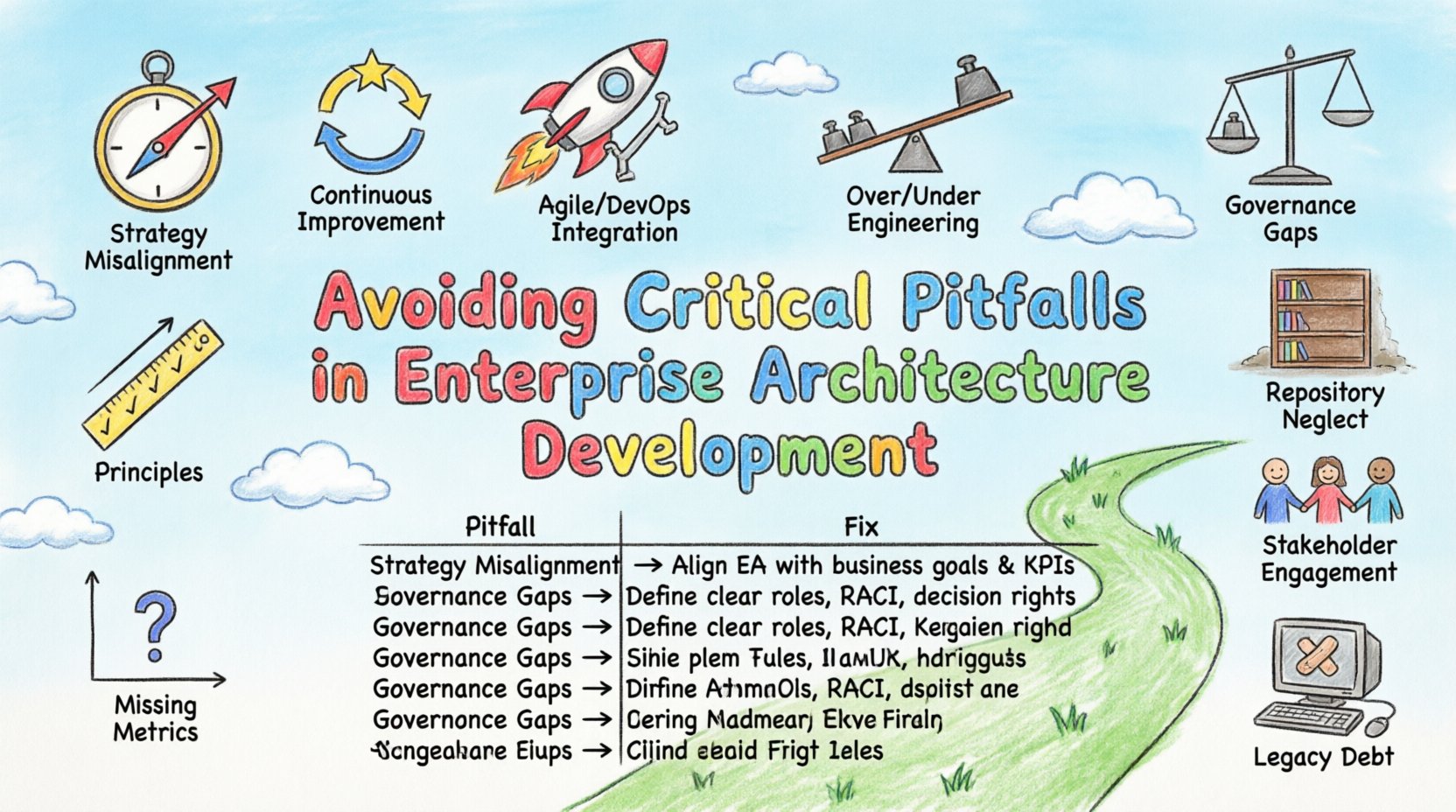
1. Misalignment Between Business Strategy and Architecture 🧭
One of the most frequent causes of EA failure is the separation of business goals from architectural decisions. When the architecture team operates in a silo, the resulting models do not reflect the actual needs of the organization. This disconnect creates a scenario where the architecture is technically sound but strategically irrelevant.
The Symptom: Architecture artifacts are reviewed but rarely referenced during project initiation.
The Root Cause: Lack of engagement from business leadership and unclear definition of architectural scope.
The Fix: Integrate business strategy reviews into the Architecture Development Method (ADM) cycles. Ensure business sponsors are signatories on key architectural decisions.
Architecture must answer the question: “How does this design enable the business to win?” If the answer is vague, the architecture is likely drifting. Stakeholders need to see a direct line of sight between an investment in technology and a measurable business outcome.
2. Governance Gaps and Committee Inefficiency ⚖️
Governance is the mechanism that ensures compliance with the architecture. However, governance bodies often become bottlenecks rather than enablers. When review committees meet infrequently or lack the authority to make binding decisions, the process loses its teeth.
Pitfall: Delaying decisions to gather more data indefinitely.
Pitfall: Allowing project managers to bypass architecture review due to “agile” pressures.
Solution: Define clear decision rights. Who approves? Who is consulted? Who is informed?
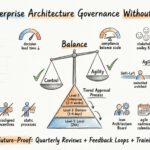
In the context of TOGAF, the Architecture Board plays a critical role. It must be empowered to enforce standards without stifling innovation. The goal is not to block projects, but to ensure they fit within the target state. If the board only says “no,” it will be circumvented. If it says “yes, if you do X,” it becomes a partnership.
3. Over-Engineering vs. Under-Engineering 🏗️📉
There is a constant tension between designing for the future and building for today. Over-engineering leads to complex solutions that are difficult to maintain. Under-engineering leads to quick fixes that accumulate technical debt.
The Balance Point
Avoid: Creating a perfect blueprint for a project that may never happen.
Avoid: Ignoring scalability requirements because the project is small.
Aim For: Modular designs that allow for incremental evolution.
Architecture should be iterative. Instead of defining every interface for a three-year roadmap, define the principles and patterns for the next six months. This approach reduces risk and allows the architecture to adapt to changing market conditions.
4. Neglecting the Architecture Repository 📚
An architecture repository is the single source of truth for all architectural assets. Too often, this repository becomes a graveyard of outdated diagrams and abandoned specifications. If architects cannot find current standards or previous decisions, they will reinvent the wheel.
Common Error: Storing artifacts in local drives instead of a central, searchable system.
Common Error: Failing to version control architectural models.
Common Error: Not linking decisions to specific business drivers.
Maintaining the repository requires discipline. It is not enough to save files; the information must be accessible and current. A mature EA function treats the repository as a living system, updated with every project completion and every governance decision.
5. The Human Element: Stakeholder Engagement 👥
Architecture is as much about people as it is about technology. If the architects cannot communicate their vision effectively, adoption will fail. Many architects fall into the trap of using jargon that alienates business partners.
Communication Strategy: Translate technical constraints into business risks.
Stakeholder Mapping: Identify who cares about what. Finance cares about cost; Operations cares about stability.
Feedback Loops: Create channels for continuous feedback from project teams.
When stakeholders feel their concerns are heard, they become advocates for the architecture. When they feel dictated to, they become adversaries. The architect’s role is to facilitate alignment, not to impose authority.
6. Managing Technology Drift and Legacy Debt 🔄
Organizations rarely start from a blank slate. Existing systems, known as legacy debt, often constrain new architectural directions. Ignoring this debt leads to integration failures and security vulnerabilities.
Assessment: Conduct regular audits of the existing landscape.
Strategy: Plan for retirement, not just addition.
Integration: Define clear interfaces for legacy systems to prevent them from becoming black holes.
Architecture development must account for the “as-is” reality. A target state that requires ripping out all legacy systems is often unrealistic. A phased approach that modernizes incrementally is more sustainable.
7. Lack of Measurable Metrics 📊
Without metrics, it is impossible to prove the value of the architecture function. If you cannot measure success, you cannot justify the budget. Common metrics include compliance rates, time to market improvements, and reduction in duplicate systems.
Compliance: Percentage of projects adhering to architectural standards.
Efficiency: Reduction in development time due to reusable components.
Stability: Decrease in system downtime or incidents related to integration.
These metrics should be reported regularly to leadership. They provide evidence of progress and highlight areas requiring intervention.
Common Pitfalls vs. Mitigation Strategies 🛡️
Pitfall Category | Typical Symptom | Mitigation Strategy |
|---|---|---|
Strategic Disconnect | Architecture ignored by business units | Embed architects in business planning teams |
Governance Bottlenecks | Projects delayed by review boards | Implement tiered governance with clear SLAs |
Documentation Decay | Outdated diagrams in repositories | Automate documentation updates from project tools |
Stakeholder Silence | Lack of feedback from end users | Conduct regular architecture reviews with users |
Technology Drift | Unmanaged legacy systems | Maintain a continuous inventory and retirement plan |
Value Blindness | Inability to demonstrate ROI | Define and track KPIs for architecture initiatives |
8. The Role of Principles and Standards 📏
Architectural principles guide decision-making when specific solutions are not yet defined. Poorly defined principles lead to inconsistent application across the enterprise. Principles should be few, memorable, and actionable.
Example: “Customer data shall be accessible only through approved services.”
Example: “Cloud infrastructure shall be preferred for new development.”
When principles are violated, there must be a clear exception process. This prevents the “policy is a suggestion” mentality. The exception process ensures that deviations are intentional, documented, and risk-assessed.
9. Integration with Agile and DevOps 🚀
Traditional architecture approaches often clash with Agile and DevOps methodologies. The perception is that architecture slows down delivery. This view is incorrect if architecture is integrated into the delivery pipeline.
Shift Left: Involve architects early in sprint planning.
Automation: Use tools to enforce architectural constraints automatically.
Empowerment: Train development teams on architectural standards so they can self-govern.
Architecture should be viewed as an enabler of speed, not a gatekeeper. By providing clear boundaries and reusable components, architects allow developers to move faster without breaking the system.
10. Continuous Improvement and Learning 🔄
The technology landscape changes rapidly. An architecture that was valid five years ago may be obsolete today. The EA function must commit to continuous learning and adaptation.
Post-Implementation Reviews: Analyze what worked and what did not after major projects.
Market Scanning: Regularly review emerging technologies for potential impact.
Training: Invest in the upskilling of the architecture team.
Stagnation is the enemy of value. A mature EA function evolves alongside the organization it supports.
Conclusion on Execution 🎯
Building a robust Enterprise Architecture is a long-term endeavor. It requires patience, discipline, and a focus on value. By avoiding the pitfalls outlined above, organizations can transform their architecture function from a theoretical exercise into a strategic asset. The goal is not perfection, but progress. Align the architecture with business needs, enforce governance fairly, and maintain a living repository of knowledge.
Success in EA is measured by the ease with which the organization adapts to change. When the architecture supports agility rather than hindering it, the investment is justified. Focus on the fundamentals: strategy, governance, people, and tools. Mastering these elements ensures a resilient foundation for the future.