In the complex landscape of enterprise technology, decisions define trajectory. When multiple teams pursue different technical paths, fragmentation occurs. This is where the Architecture Board becomes essential. Within the context of TOGAF, this body ensures alignment between business strategy and technical execution. Without a structured governance mechanism, organizations risk accumulating technical debt and losing agility.
This guide explores how Architecture Boards streamline decision making. We will examine the composition, processes, and integration with the Architecture Development Method (ADM). The goal is to establish a clear, authoritative process that reduces friction and increases confidence in architectural choices.
🧩 Understanding the Architecture Board
An Architecture Board is a governance body responsible for reviewing, approving, and guiding architectural decisions. It is not merely a meeting room; it is a formal mechanism for oversight. In TOGAF, this board operates within the Architecture Governance framework. Its primary function is to ensure that projects adhere to the defined architecture principles and standards.
Why is this necessary? Consider a scenario where five different departments buy different software solutions for similar problems. The result is siloed data and redundant costs. An Architecture Board intervenes early to evaluate these proposals against the enterprise strategy.
Core Functions
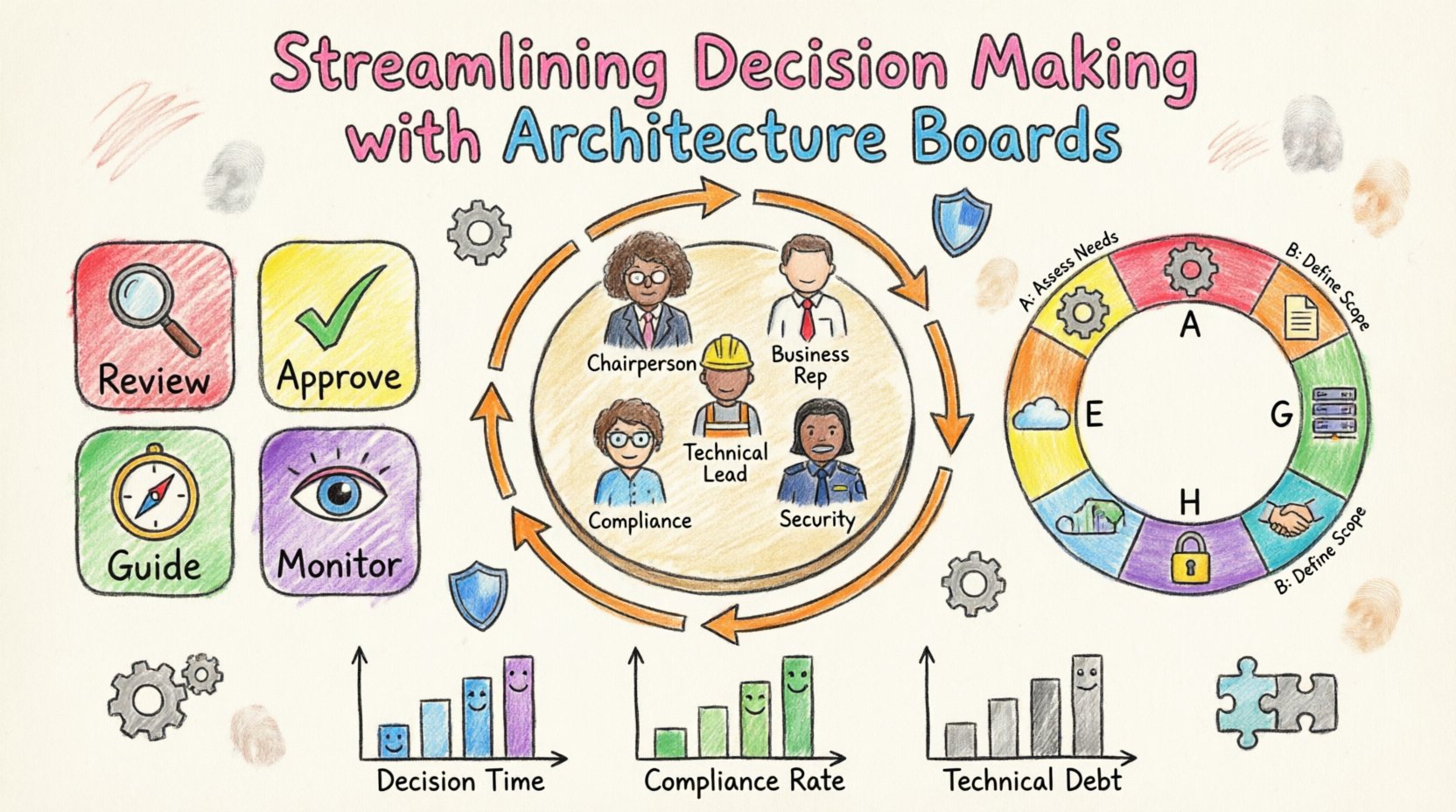
- Review: Assessing proposed architectures for compliance.
- Approve: Granting permission to proceed with implementation.
- Guide: Providing direction on trade-offs and risks.
- Monitor: Tracking adherence to decisions post-implementation.
This body acts as a checkpoint. It ensures that the cost of decisions is weighed against the value they deliver. It prevents ad-hoc choices that might look good in isolation but fail in the broader context.
👥 Composition and Roles
The effectiveness of the board depends heavily on who sits at the table. It requires a mix of technical depth and business acumen. A board filled only with engineers may miss business implications. A board filled only with managers may lack technical feasibility insight.
Below is a breakdown of typical roles found within a robust Architecture Board:
| Role | Responsibility | Typical Background |
|---|---|---|
| Chairperson | Facilitates meetings and drives consensus | Chief Architect or Director |
| Business Representative | Ensures alignment with strategic goals | VP of Operations or Product Lead |
| Technical Lead | Evaluates technical feasibility and risks | Senior Solutions Architect |
| Security Specialist | Validates compliance and security posture | CISO or Security Architect |
| Compliance Officer | Checks regulatory and legal requirements | Legal or Governance Lead |
Each member brings a specific lens. The Chairperson ensures the process moves forward efficiently. The Business Representative prevents technology from becoming an end in itself. The Security Specialist protects the organization from vulnerabilities. This diversity prevents groupthink and ensures comprehensive evaluation.
🔄 Integrating with the ADM Cycle
The Architecture Development Method (ADM) is the engine of TOGAF. The Architecture Board does not exist in a vacuum; it must interface with specific phases of the ADM cycle. Understanding these touchpoints is critical for streamlining decisions.
Phase A: Architecture Vision
At the start, the board reviews the initial Architecture Vision. This document outlines the scope and constraints. The board validates that the vision aligns with the organization’s long-term strategy. Early alignment here prevents costly pivots later.
Phase B, C, and D: Business, Information Systems, and Technology
During these development phases, the board reviews the Architecture Definition Document. It checks for consistency across the domains. If the Business Architecture conflicts with the Technology Architecture, the board identifies the gap. This is where trade-off discussions happen. For example, a business requirement for speed might conflict with a security requirement for thoroughness.
Phase E: Opportunities and Solutions
Here, the board evaluates implementation options. They decide whether to build, buy, or reuse. This decision impacts the budget and timeline significantly. The board ensures that the chosen solution fits the existing landscape.
Phase F: Migration Planning
The board reviews the migration plan to ensure the transition is feasible. They assess risks associated with moving from the baseline to the target architecture. This is a critical control point before resources are committed.
Phase G: Implementation Governance
During implementation, the board monitors compliance. Projects must report back on their adherence to the approved architecture. If a project deviates, the board assesses whether to enforce compliance or approve a change.
Phase H: Architecture Change Management
Finally, the board manages changes to the architecture itself. As the environment evolves, the architecture must evolve. The board ensures that changes are deliberate and documented, maintaining the integrity of the enterprise model.
⚖️ Governance Processes that Work
Process defines the flow of work. Without clear processes, the board becomes a bottleneck. The goal is to streamline, not obstruct. Here are key processes to establish:
1. The Architecture Change Request
Any deviation from the baseline architecture requires a formal request. This document should include:
- Justification: Why is the change needed?
- Impact Analysis: How does this affect other systems?
- Risk Assessment: What are the potential downsides?
- Cost Implication: What is the financial impact?
This ensures that requests are data-driven rather than opinion-based.
2. Decision Logging
Every decision made by the board must be recorded. This creates an audit trail. Future architects can reference past decisions to understand the context of current constraints. It prevents the “re-invention of the wheel” or repeating past mistakes.
3. Escalation Path
Not every issue can be resolved at the board level. There must be a clear path for escalation. If the board cannot agree, who decides? Typically, this involves senior executive leadership. Defining this path prevents deadlock.
4. Feedback Loops
The board should not just decide and leave. It must gather feedback from implementation teams. Did the approved architecture work in practice? Were the assumptions valid? This feedback informs future decisions and improves the quality of the board’s oversight.
🚧 Overcoming Common Bottlenecks
Even well-structured boards face challenges. Recognizing these pitfalls allows for proactive mitigation. Below are common issues and how to address them.
Bottleneck: Slow Decision Velocity
If the board meets infrequently or takes too long to deliberate, projects stall. Solution: Establish a cadence that matches project needs. Use tiered review levels. Simple changes might go through a sub-committee, while major shifts go to the full board.
Bottleneck: Lack of Authority
If the board can recommend but not decide, its recommendations are ignored. Solution: Define the board’s authority in the charter. Ensure executive sponsorship backs the board’s decisions.
Bottleneck: Technical Jargon
Business stakeholders may not understand technical proposals. Solution: Require clear communication. Use diagrams and business language. Explain the “why” before the “how”.
Bottleneck: Scope Creep
The board starts reviewing everything, even minor details. Solution: Set clear thresholds. Define what constitutes a “major” architectural change versus a minor adjustment. Focus the board’s time on high-impact decisions.
📊 Measuring Effectiveness
How do you know the board is working? You need metrics. These indicators help refine the governance process over time.
- Decision Turnaround Time: How long does it take to get an approval? Lower is generally better, provided quality is maintained.
- Compliance Rate: What percentage of projects adhere to the approved architecture? High compliance indicates effective governance.
- Technical Debt Reduction: Are initiatives funded specifically to reduce legacy debt? A reduction in debt suggests good architectural planning.
- Stakeholder Satisfaction: Do business leaders feel supported by the architecture team?
- Risk Mitigation: How many security or compliance issues were caught before implementation?
These metrics should be reviewed quarterly. They provide evidence of value to the organization.
🛠️ Best Practices for Success
To ensure the Architecture Board functions optimally, adopt these practices:
- Document Everything: Maintain a living repository of all decisions, policies, and standards.
- Train the Team: Ensure all stakeholders understand the governance process. Training reduces friction and errors.
- Keep it Lean: Limit the number of attendees to those who can add value. Large meetings slow down decision making.
- Use Visuals: Architecture diagrams are more effective than text for explaining complex relationships.
- Be Transparent: Publish meeting agendas and outcomes to build trust across the organization.
- Separate Strategy from Tactics: The board should focus on strategic alignment, not micromanaging code or specific configurations.
🔗 The Relationship with Project Governance
The Architecture Board operates alongside Project Governance. While the board focuses on the “What” and “Why,” Project Governance focuses on the “How” and “When.” They must complement each other.
When a project begins, it must align with the architecture. If a project is found to be out of alignment, the Architecture Board engages. However, if the architecture itself is the problem, the board reviews the change request to update the standards.
This symbiotic relationship ensures that execution supports strategy. It prevents the scenario where a project is delivered on time but fails to meet business needs due to architectural misalignment.
🎯 Conclusion
Streamlining decision making is about clarity and authority. The Architecture Board provides the structure needed to make informed choices. By integrating with TOGAF processes, defining clear roles, and establishing robust governance, organizations can navigate complexity with confidence.
The path forward requires commitment. It demands that stakeholders respect the process and that the board respects the constraints of the business. When balanced correctly, this governance mechanism becomes an enabler of innovation rather than a barrier to progress.
Start by defining your charter. Identify your members. Set your cadence. Then, focus on the work that matters: making decisions that drive the enterprise forward.