


Systems Modeling Language (SysML) has become the cornerstone of Model-Based Systems Engineering (MBSE) across various industries. For beginners entering the field, understanding the trajectory of this language is just as critical as learning the syntax today. The landscape of systems engineering is shifting rapidly, driven by the need for greater complexity management, automation, and interoperability. This guide explores the significant trends shaping the future of SysML and explains why staying informed is vital for your professional development.
As you embark on your journey to understand systems architecture, you will encounter a dynamic environment. The tools and standards you learn now will evolve. By anticipating these changes, you can build a foundation that remains relevant. The following sections detail the key areas of innovation, from language evolution to the integration of artificial intelligence. Each trend represents a shift in how engineers approach problem-solving and system definition.
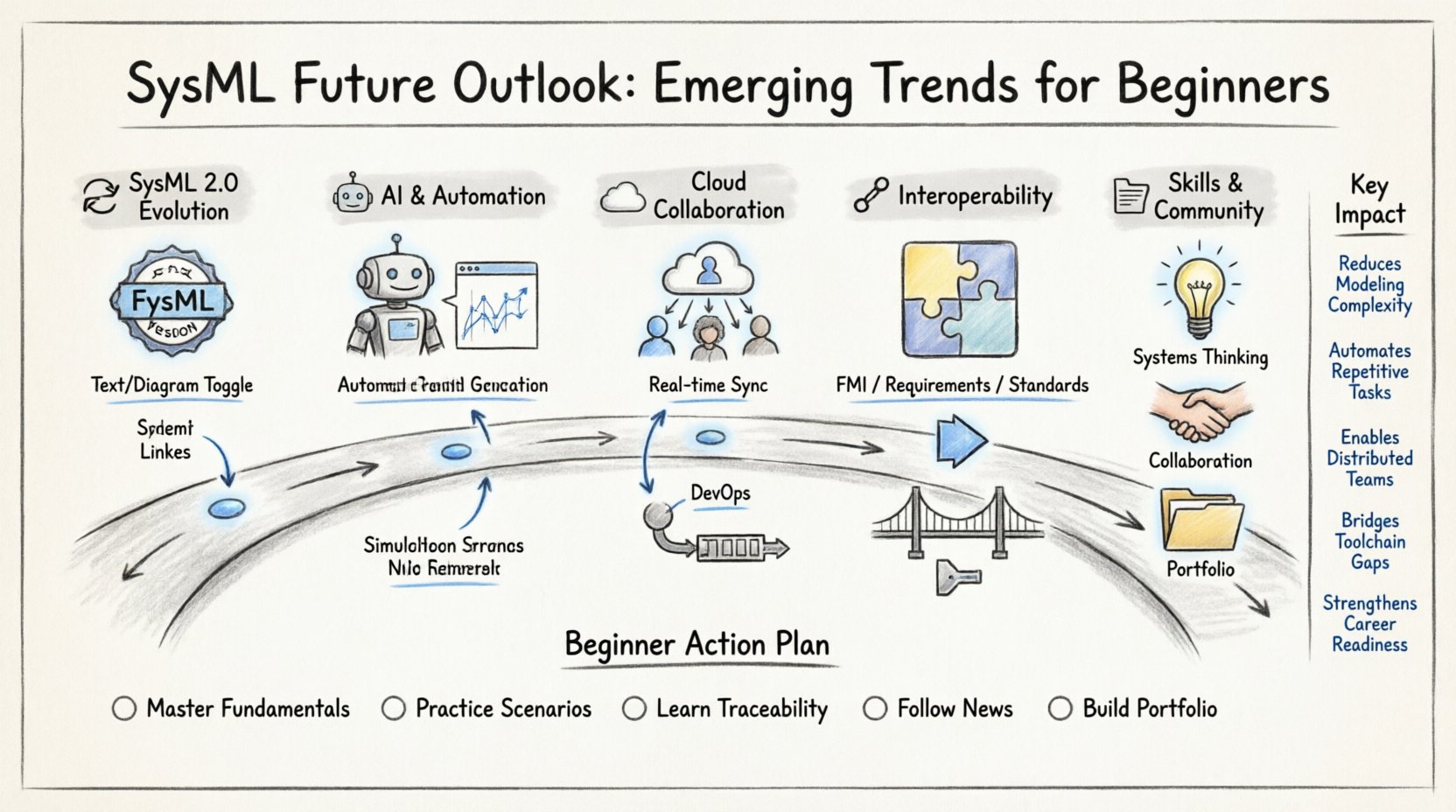
🔄 The Evolution of SysML Standards
The Object Management Group (OMG) continues to refine SysML to meet the growing demands of complex engineering projects. The current version, SysML 1.6, has served the community well, but the future points toward SysML 2.0. This upcoming iteration is not merely a patch but a significant restructuring designed to address modern challenges.
Beginners should pay attention to these developments because the core concepts will remain stable, but the application methods will change. Here are the primary areas of focus in the standard evolution:
- Integration with Domain Specific Languages: Future versions aim to better accommodate specialized needs within sectors like automotive or aerospace without fragmenting the core language.
- Textual Syntax Support: While diagrams are visual, text-based specifications offer precision. The next standards will enhance support for textual descriptions alongside graphical models.
- Improved Semantics: Clearer definitions of relationships and constraints reduce ambiguity. This is crucial for beginners who often struggle with the nuanced meanings of connectors and dependencies.
- Interoperability Enhancements: Better support for exchanging data between different modeling environments ensures that models are not siloed.
Understanding these shifts helps you focus your learning efforts. Instead of memorizing every obscure diagram type, focus on the fundamental semantics that drive the language. These core concepts will persist regardless of syntax changes.
🤖 Artificial Intelligence and Automation
One of the most exciting frontiers in systems modeling is the integration of Artificial Intelligence (AI) and Machine Learning (ML). Automation in modeling is not about replacing the engineer but augmenting their capabilities. For a beginner, this means the barrier to entry for creating complex models may lower, allowing you to focus on high-level architecture.
Several automation trends are emerging in the space:
- Automated Diagram Generation: AI tools can suggest relevant diagrams based on textual requirements. This reduces the time spent on formatting and allows the engineer to focus on content.
- Code Synthesis: Models are increasingly used to generate code directly. Future trends point toward bidirectional synchronization, where code changes can update the model and vice versa.
- Predictive Analysis: Machine learning algorithms can analyze models to predict potential bottlenecks or risks in the system design before physical prototyping begins.
- Intelligent Traceability: AI can help maintain requirements traceability automatically, flagging inconsistencies when requirements change.
As a novice, you should not fear automation. Instead, view it as a tool that handles repetitive tasks. Your value lies in the critical thinking required to define system boundaries and interfaces. Automation handles the mechanics; you handle the logic.
☁️ Cloud-Based Collaboration and Version Control
Traditional modeling often occurred on local workstations. The future is undeniably cloud-native. Collaboration is essential in modern systems engineering, where teams span multiple locations and disciplines. Cloud-based platforms facilitate real-time interaction and centralized data management.
This shift impacts how beginners approach their workflow:
- Real-Time Co-Editing: Multiple engineers can work on the same model simultaneously. This reduces the friction of merging changes later.
- Centralized Repositories: Models are stored in the cloud, ensuring everyone accesses the latest version. This eliminates the common issue of “version mismatch” in requirements.
- Integration with DevOps: Systems modeling is merging with software development operations. Cloud platforms allow models to be part of the continuous integration pipeline.
- Scalability: Cloud infrastructure allows for handling massive models that might crash a local machine. This is vital for large-scale systems like spacecraft or smart cities.
For those starting out, familiarity with cloud collaboration tools is becoming a prerequisite skill. It mirrors the way modern software is developed and managed.
🔗 Interoperability and Standard Integration
Systems do not exist in isolation. They interact with software, hardware, and other systems. A major trend in the future of SysML is improved interoperability with other standards. This ensures that the model can speak the language of the rest of the engineering ecosystem.
Key integration points include:
- Functional Mock-up Interface (FMI): This standard allows models to be simulated with external tools. SysML models will increasingly be linked directly to simulation environments.
- Requirements Management Systems: Integration with dedicated requirements tools ensures that the model reflects the official requirements baseline.
- Domain Standards: Compliance with industry standards like ISO 26262 for automotive or DO-178C for avionics requires specific modeling practices. Future SysML versions will streamline these compliance checks.
- Physical Simulation: Connecting abstract models to physical behavior simulations helps validate designs early in the lifecycle.
Beginners should understand that SysML is a connective tissue. It binds requirements, design, and verification together. Knowing how to connect these data points is more valuable than knowing how to draw a single block diagram.
📊 Key Trends at a Glance
To summarize the landscape, here is a structured overview of the emerging trends and their implications for a beginner.
| Trend | Impact on Engineering | Beginner Focus Area |
|---|---|---|
| SysML 2.0 Evolution | Standardizes semantics and syntax | Focus on core concepts over syntax |
| AI and Automation | Reduces manual diagramming effort | Learn to validate AI suggestions |
| Cloud Collaboration | Enables real-time teamwork | Adopt version control practices |
| Interoperability | Bridges systems and software | Understand data exchange formats |
| DevOps Integration | Aligns systems with software delivery | Learn continuous integration basics |
🎓 Skill Development for the Future
As the tools change, the skills required to be effective also evolve. A beginner in SysML today must prepare for a career that blends systems thinking with digital fluency. The following skills will become increasingly important.
- Systems Thinking: The ability to see the whole system rather than just components. This is the foundation of SysML and will never become obsolete.
- Data Literacy: Understanding how data flows through the model and how it is exchanged with other systems.
- Communication: Models are communication tools. Being able to explain your model to stakeholders is a critical soft skill.
- Adaptability: The technology stack will change. Being willing to learn new interfaces and tools is essential.
- Domain Knowledge: SysML is a generic language. Applying it effectively requires understanding the specific domain, such as healthcare or defense.
⚠️ Challenges to Watch
While the future is bright, there are challenges that the industry must address. Awareness of these hurdles helps manage expectations and plan accordingly.
- Complexity of Adoption: Moving from traditional documentation to model-based approaches requires significant cultural change. Organizations often struggle with this transition.
- Tool Fragmentation: While interoperability is improving, the market still has many different tools. Ensuring models work across different environments remains a technical challenge.
- Training Gaps: There is a shortage of trained personnel. Many organizations are trying to upskill existing engineers, which can lead to inconsistent practices.
- Cost of Implementation: High-quality modeling environments can be expensive. Smaller organizations may find it difficult to invest in the necessary infrastructure.
🌐 The Role of the Community
The Systems Modeling Language community is a vital resource for anyone learning the language. Unlike proprietary software, SysML is an open standard. This means the community drives the evolution of the language through feedback and contribution.
Engaging with the community offers several benefits:
- Knowledge Sharing: Forums and conferences allow practitioners to share solutions to common problems.
- Standardization Input: The community provides feedback to the Object Management Group on how the standard is used in the real world.
- Networking: Building connections with other engineers can lead to mentorship opportunities and job prospects.
- Access to Resources: Tutorials, templates, and best practices are often shared freely within the community.
Beginners are encouraged to participate in these discussions. Reading through past threads can provide insights into how experienced engineers handle complex modeling scenarios.
🛠️ Practical Steps for Beginners
Knowing the trends is useful, but applying them is better. Here are actionable steps to take as you start your journey in systems modeling.
- Start with Fundamentals: Do not rush to advanced features. Master the core diagrams: Requirements, Use Case, Block Definition, and Internal Block.
- Practice Real Scenarios: Apply the language to a system you understand, such as a coffee machine or a simple robot. This grounds abstract concepts in reality.
- Learn Traceability: Understand how to link requirements to design elements. This is the primary value of MBSE.
- Follow Industry News: Read updates from the Object Management Group and industry publications to stay current.
- Build a Portfolio: Document your models and the problems they solved. This demonstrates your skills to future employers.
🌟 Looking Ahead
The trajectory of SysML is clear. It is moving toward greater integration, automation, and accessibility. For the beginner, this means more opportunities but also a need for continuous learning. The technology is not replacing the engineer; it is empowering them to tackle larger, more complex problems.
By keeping an eye on these emerging trends, you position yourself as a forward-thinking professional. You are not just learning a syntax; you are learning a methodology for managing complexity. The systems of tomorrow are being modeled today, and your understanding of these future trends will define your effectiveness in the field.
Stay curious. Engage with the community. Focus on the core principles of systems engineering. The tools will change, but the need for structured, logical system design remains constant. This is the true future of systems modeling.
Related posts:
 MBSE for Beginners: A Clear SysML Primer That Explains the Core Concepts Without the Jargon
 The SysML Cheat Sheet: Your 10-Minute Quick Start Guide to Modeling Requirements and Block Definitions
 Stop Guessing with SysML: A Practical Checklist for MBSE Leads to Avoid Early Roadblocks
 SysML Case Study: How a Simple Elevator Model Reveals Complex Behavior Issues in MBSE