Organizations today face a relentless tide of disruption. Market dynamics shift, technologies evolve, and regulatory landscapes transform. In this environment, change is not an event; it is a continuous state of being. However, many transformation initiatives stall or fail to deliver intended value. The missing link is often a clear definition of Business Architecture. This discipline provides the structural blueprint necessary to align strategy with execution, ensuring that organizational change is not merely reactive but strategically grounded.
When we speak of Business Architecture within the context of frameworks like The Open Group Architecture Framework (TOGAF), we are discussing the fundamental organization of a business. It is the bridge between high-level business strategy and the detailed implementation of processes, information, and technology. Without this bridge, change efforts become disjointed silos of activity. With it, organizations gain the clarity needed to navigate complexity and achieve sustainable growth. This guide explores how to define and leverage Business Architecture to drive meaningful organizational change.
🧩 Understanding the Core of Business Architecture
Before diving into the mechanics of change, it is essential to define what Business Architecture actually is. It is not merely an organizational chart or a process diagram. It is a comprehensive representation of the business capabilities, value streams, and information flows that enable the organization to function.
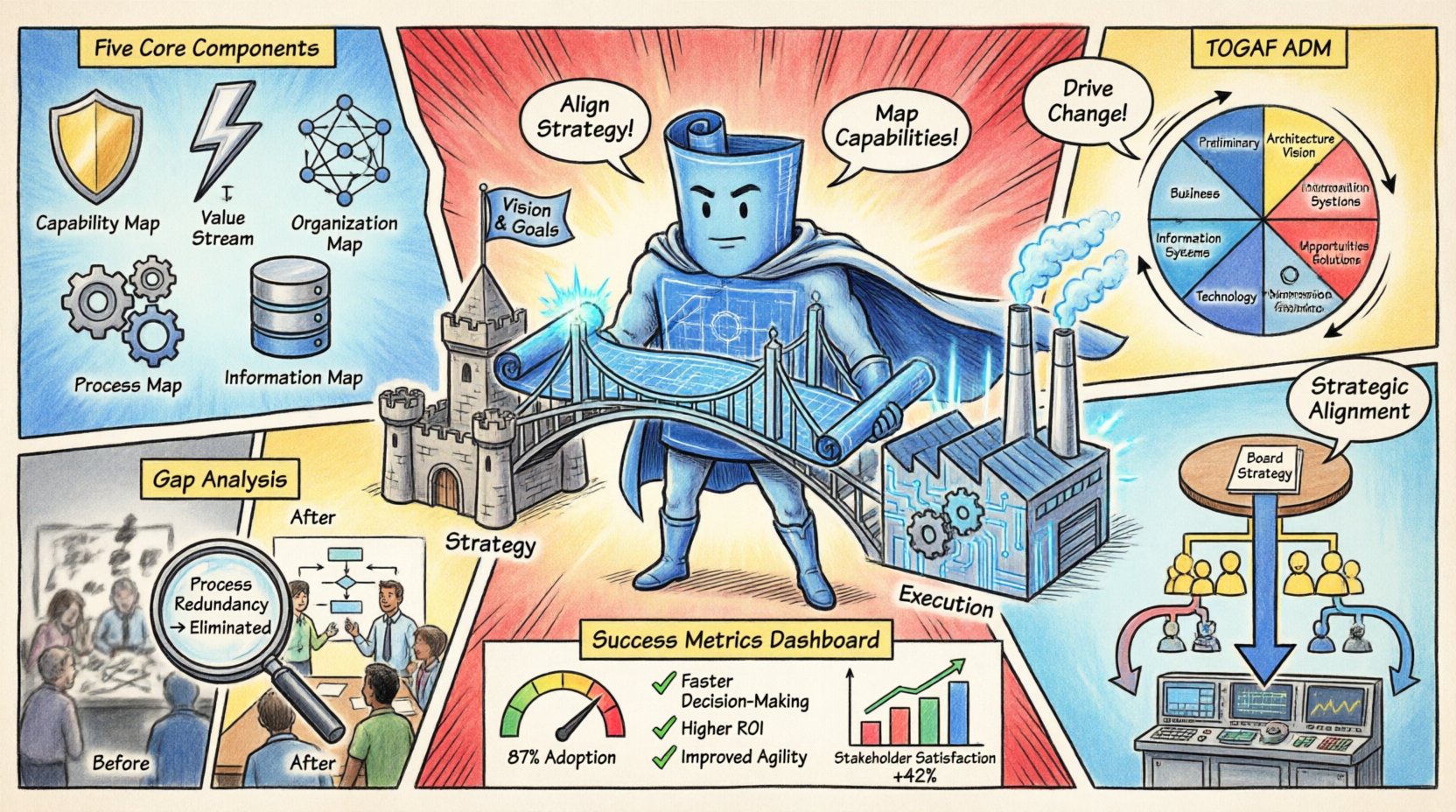
- Business Capabilities: These describe what the business does, not how it does it. A capability is a stable building block of the organization, such as “Customer Management” or “Product Development.” Capabilities do not change frequently, unlike specific processes or systems.
- Value Streams: These map the end-to-end flow of activities that create value for a specific customer. From the initial request to the final delivery, value streams show how the organization creates outcomes.
- Business Processes: These are the specific sequences of steps taken to achieve a goal. Architecture defines the relationships between processes and capabilities.
- Organization Structure: This defines how the business is organized to execute its capabilities. It includes departments, teams, and roles.
- Information Assets: The data required to support the business capabilities and value streams. This includes key business objects and data governance policies.
By defining these elements clearly, leaders can see the gap between the current state and the desired future state. This visibility is the foundation of successful change management.
📜 The TOGAF Framework Context
The Open Group Architecture Framework (TOGAF) is the most widely used standard for enterprise architecture. It provides a structured approach to designing, planning, implementing, and governing an enterprise information architecture. Within TOGAF, Business Architecture is a specific domain within the Architecture Development Method (ADM).
Understanding the TOGAF context is crucial because it offers a standardized language and set of artifacts. This standardization ensures that stakeholders across the organization speak the same language when discussing change.
The Architecture Development Method (ADM)
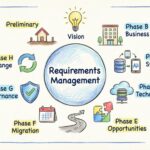
The ADM is the core of TOGAF. It is a cyclic process that guides the development of an architecture. Business Architecture plays a critical role in several phases:
- Phase A: Architecture Vision: Here, the scope and boundaries of the business architecture are defined. Stakeholders agree on the goals of the change initiative.
- Phase B: Business Architecture: This is the primary phase for defining the target business architecture. It involves documenting the baseline and target capabilities, value streams, and organizational structures.
- Phase C: Information Systems Architectures: Business architecture guides the design of data and application architectures to ensure they support the business needs.
- Phase D: Technology Architecture: Technology choices are made based on the requirements defined in the business architecture.
- Phase E: Opportunities and Solutions: The architecture identifies the gaps between the baseline and target, determining the projects needed to close those gaps.
- Phase F: Migration Planning: This phase creates a roadmap for implementing the changes defined in the business architecture.
- Phase G: Implementation Governance: Ensures that the implemented solutions align with the defined business architecture.
- Phase H: Architecture Change Management: Manages changes to the architecture itself as the business evolves.
🛠️ Core Components and Artifacts
To define Business Architecture effectively, specific artifacts must be created. These artifacts serve as the documentation and communication tools for the organization. Below is a breakdown of the essential components used in this definition.
| Component | Purpose | Key Question Answered |
|---|---|---|
| Capability Map | Visualizes what the organization does | What capabilities do we need to deliver our strategy? |
| Value Stream Map | Shows how value is delivered to customers | How do we create value for our stakeholders? |
| Organization Map | Defines roles, units, and locations | Who is responsible for which capabilities? |
| Process Map | Details the steps to achieve outcomes | How do we execute our capabilities? |
| Information Map | Lists critical business objects and data | What data drives our decision-making? |
These components are not static. They evolve as the organization changes. A Capability Map, for instance, should be reviewed regularly to ensure it reflects the current reality and future direction. When an organization decides to enter a new market, the Capability Map is updated to include the capabilities required for that market. This dynamic nature allows the architecture to remain relevant.
🔄 Driving Organizational Change Through Architecture
Why does Business Architecture matter for change? Because change requires alignment. When an organization decides to shift its strategy, every part of the business must move in the same direction. Business Architecture provides the map for this movement.
1. Gap Analysis
Gap analysis is a fundamental technique in defining business architecture for change. It involves comparing the current state (Baseline) with the desired future state (Target).
- Capabilities Gap: Which capabilities exist today, and which are missing?
- Process Gap: Are current processes efficient enough to support the target capabilities?
- Organization Gap: Do we have the right people and structures in place?
- Technology Gap: Does the current technology stack support the required capabilities?
By identifying these gaps, leaders can prioritize initiatives. They can determine which changes are critical for immediate success and which can be deferred. This prioritization prevents resource dilution and ensures focus on high-impact areas.
2. Strategic Alignment
Business Architecture ensures that IT and operational investments are directly linked to business strategy. Often, technology projects are launched without a clear understanding of the business value they bring. Architecture forces a review of this connection.
For example, if the strategy is to become a digital-first retailer, the Business Architecture must reflect capabilities for online customer engagement, digital payment processing, and real-time inventory management. If the architecture does not reflect this, the strategy is disconnected from reality. Architecture acts as the translator between the Boardroom vision and the Factory floor execution.
3. Managing Complexity
Large organizations are inherently complex. Multiple divisions, legacy systems, and varying processes make change difficult. Business Architecture breaks down this complexity into manageable components.
By mapping the organization, leaders can see interdependencies. Changing one capability might impact another. Understanding these relationships allows for risk mitigation. For instance, if a new capability is being introduced, the architecture shows which existing processes will need to be modified and which stakeholders must be consulted.
🤝 Stakeholder Engagement and Governance
Defining Business Architecture is not a task for architects alone. It requires active participation from business leaders. The engagement of stakeholders is critical for success.
- Identify Key Stakeholders: Who owns the capabilities? Who understands the value streams? Identify these individuals early.
- Establish Governance: Create a governance body to review and approve architectural changes. This ensures consistency and prevents unauthorized deviations from the strategy.
- Communication: Architecture is a communication tool. Use the maps and diagrams to explain complex changes to the wider organization. Visuals are often more effective than text.
- Training: Ensure that staff understand the architecture. They need to know how their work fits into the larger picture.
Governance also involves maintaining the architecture repository. This is the central store of all architectural artifacts. It ensures that everyone is working from the same version of the truth. Without a repository, information becomes fragmented and outdated, leading to confusion during change initiatives.
📊 Measuring Success and Effectiveness
How do you know if the Business Architecture is supporting organizational change effectively? You need metrics. However, measuring architecture is often overlooked. Here are key areas to monitor:
- Alignment Score: How well do projects align with the target capabilities? This can be measured by tracking the percentage of projects linked to specific architectural goals.
- Change Velocity: How quickly can the organization implement new capabilities? A mature architecture should reduce the time to market for new initiatives.
- Cost Efficiency: Are redundant capabilities being eliminated? Architecture should identify and remove duplication, reducing operational costs.
- Stakeholder Satisfaction: Do business leaders feel that the architecture supports their needs? Regular surveys can gauge this sentiment.
- Adoption Rate: Are the defined processes and capabilities being used as intended? Low adoption indicates a gap between definition and reality.
These metrics should be reviewed periodically. They provide feedback loops that allow the architecture to be refined. If a metric indicates a problem, the architecture can be adjusted to address the root cause.
⚠️ Common Challenges and Mitigation
Defining Business Architecture is not without challenges. Leaders should be aware of common pitfalls and have strategies to mitigate them.
- Over-Engineering: Creating too much detail can paralyze the organization. Keep the architecture high-level enough to be understandable but detailed enough to be useful. Focus on the critical capabilities first.
- Lack of Buy-in: If business leaders do not see the value, they will not participate. Demonstrate quick wins. Show how architecture helps solve immediate problems.
- Static Documentation: Architecture that is not maintained becomes obsolete. Treat the architecture as a living document. Schedule regular reviews.
- Isolation: Architecture should not exist in a silo. Integrate it with strategy, portfolio management, and project management. Ensure data flows between these domains.
- Resistance to Change: People often resist new structures. Involve them in the design process. Listen to their concerns and address them transparently.
🚀 Future Trends in Business Architecture
The field of Business Architecture is evolving. As organizations become more agile and digital, the definition of architecture must adapt.
- Agile Architecture: Traditional architecture was often slow and waterfall-based. Agile architecture supports iterative development and rapid change. It focuses on enabling teams rather than controlling them.
- Data-Driven Architecture: With the rise of analytics, architecture must incorporate data capabilities. Decisions are increasingly based on data, so the architecture must support data quality and accessibility.
- Ecosystem Thinking: Organizations no longer operate in isolation. They operate within ecosystems of partners, suppliers, and customers. Business Architecture must map these external relationships.
- Automation: Automated tools are emerging to help manage architecture repositories. While we do not endorse specific software, the trend towards automation helps maintain accuracy and timeliness.
🏁 Sustaining the Architecture
The work of defining Business Architecture does not end with a report. It requires ongoing maintenance and evolution. The organization must build a culture where architecture is valued and utilized. This means embedding architectural thinking into the daily operations of the business.
Leaders must champion the architecture. When executives reference the architecture in decision-making, it signals its importance to the rest of the organization. Training programs should be established to upskill employees on architectural concepts. This creates a workforce that understands the “why” behind the changes.
Furthermore, the architecture must be linked to the budget. Funding should be allocated based on the architectural roadmap. This ensures that resources are directed toward the initiatives that matter most. Without financial alignment, architectural plans remain theoretical.
Finally, embrace the iterative nature of change. The target state is not a destination; it is a horizon. As the market shifts, the architecture must shift with it. Flexibility is a key attribute of a successful Business Architecture. It allows the organization to pivot quickly without losing its core identity.
💡 Final Thoughts on Organizational Resilience
Defining Business Architecture is an investment in the future stability and adaptability of the organization. It provides the clarity needed to navigate uncertainty. By mapping capabilities, value streams, and structures, leaders can make informed decisions about change. This approach reduces risk and increases the likelihood of success.
Organizational change is inevitable. The question is not whether you will change, but how you will manage that change. Business Architecture offers a proven path. It connects the dots between strategy and execution. It ensures that every action taken contributes to the broader goals of the enterprise.
As you embark on this journey, remember that architecture is a tool, not an end in itself. Its value lies in its ability to facilitate understanding and decision-making. Use it to empower your teams, clarify your strategy, and drive sustainable growth. The path forward is clearer when you have the right blueprint in place.