


Introduction
For decades, enterprise software development relied heavily on Model-Driven Architecture (MDA) and rigorous UML modeling to ensure system integrity. However, as the industry shifted toward Agile methodologies, these traditional, heavyweight modeling approaches often became bottlenecks—creating siloed documentation, slowing down iteration cycles, and disconnecting architects from cross-functional teams. The challenge has always been: how do you maintain the architectural rigor of UML while embracing the speed and collaboration of Agile?
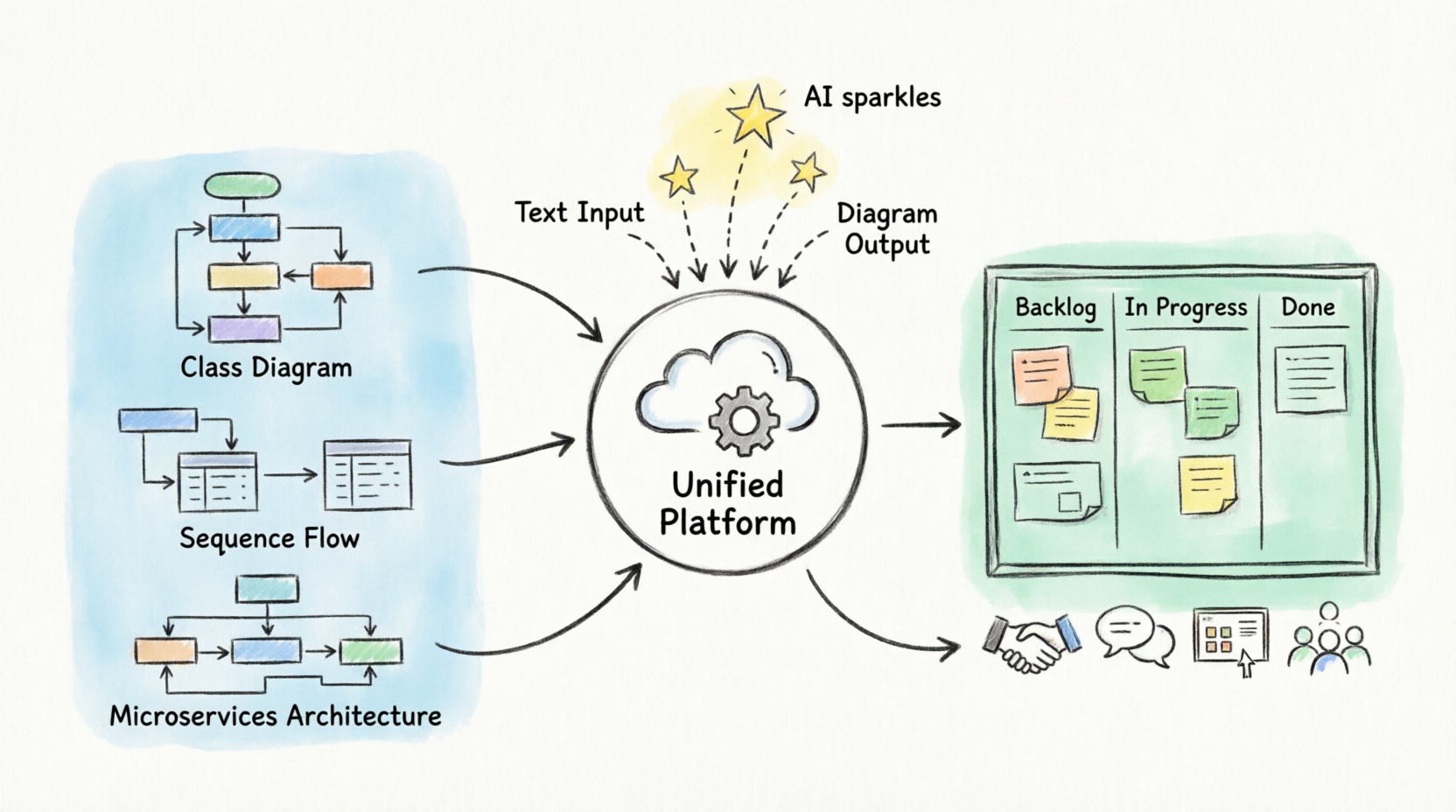
In June 2026, Visual Paradigm answered this question with the launch of the Visual Paradigm Unified Platform. This transformative ecosystem bridges the gap between robust desktop visual modeling and agile cloud productivity. By integrating over 100 specialized apps, breaking down data silos, and deeply embedding generative AI into the workflow, Visual Paradigm provides a complete guide to upgrading your traditional MDA approach into an extremely agile, collaborative, and AI-accelerated powerhouse.
The Shift from Traditional MDA/UML to Agile Collaboration
Traditional UML and MDA approaches excel at defining complex system architectures, but they often suffer from disconnected workflows. Architects build models in isolation, while product managers and developers use entirely different tools for sprint planning, requirements, and documentation. This fragmentation leads to duplicated efforts and misaligned teams.
The Unified Platform solves this by consolidating multi-app workflows into a single, cohesive environment. It allows enterprise architects to maintain their rigorous UML/SysML modeling on the desktop while simultaneously giving product managers and agile teams instant access to the same data for sprint planning, roadmap creation, and requirement tracking—all without leaving a centralized hub.
Core Pillars of the Unified Platform
A Centralized Cloud Drive for All Data
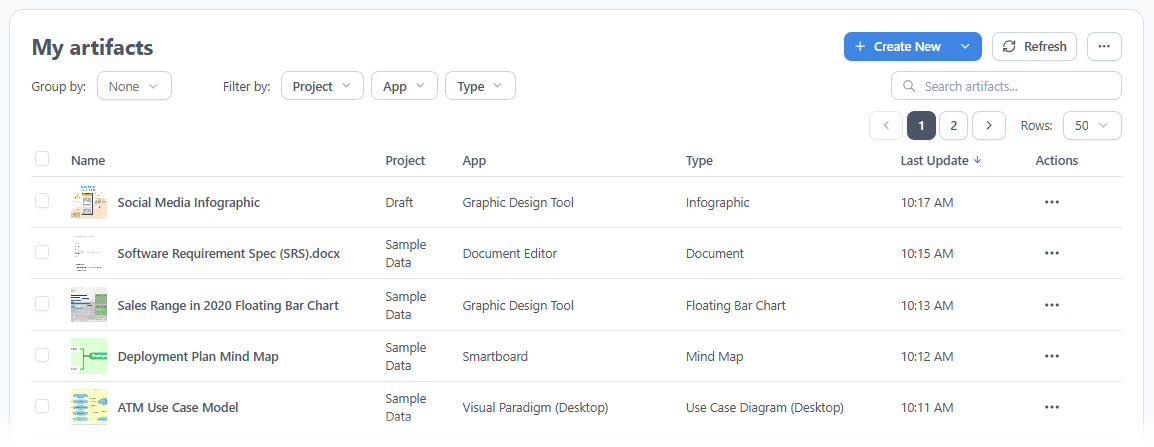
The Unified Drive acts as a universal file system. Every diagram, artifact, document, or project created across the entire suite of apps is automatically organized and visible in this centralized location, eliminating siloed data and manual export-import cycles.
Desktop and Web Browser Synergy
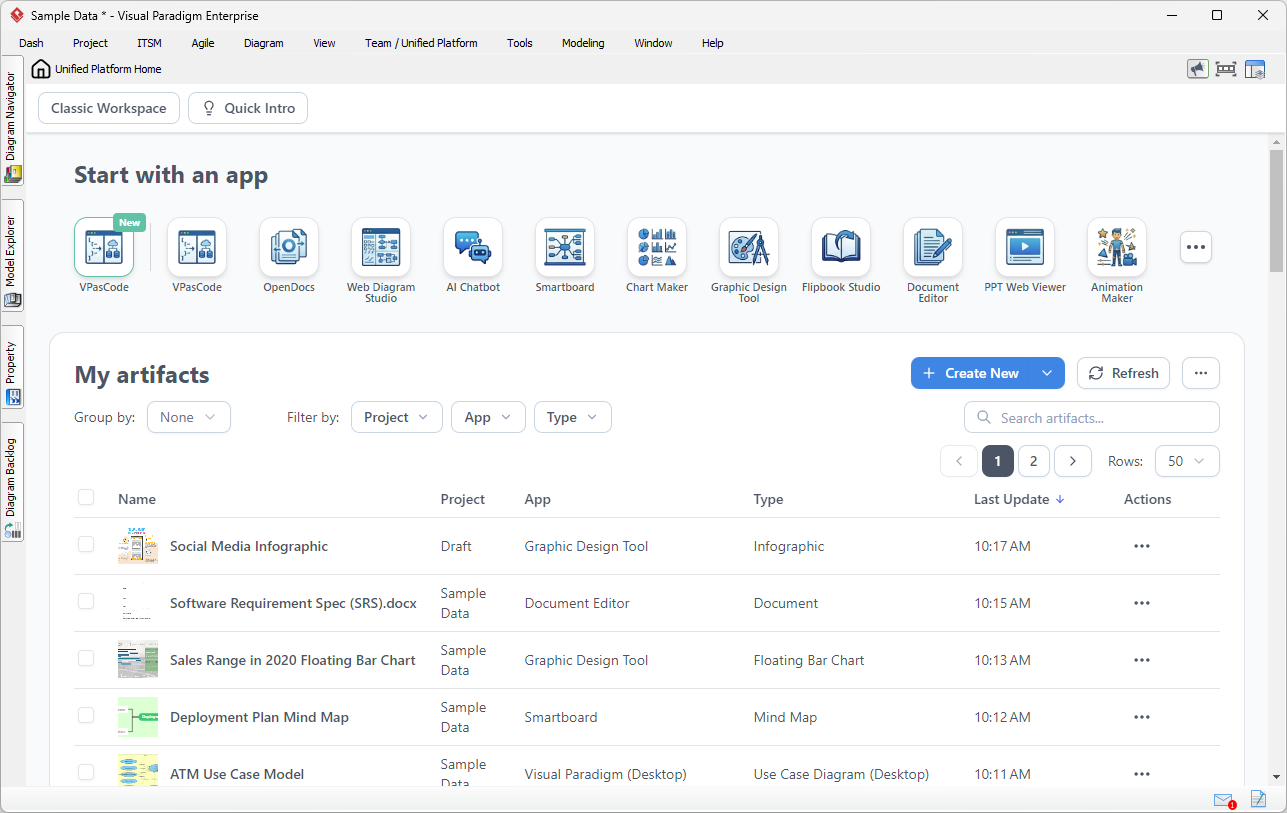
The platform is accessible directly inside the Visual Paradigm Desktop environment via an embedded browser. Local diagrams are completely visible and manageable within the Unified Platform, and you can log in through any external web browser to access your desktop-synced and cloud-native assets seamlessly.
A Central Entrance to 100+ Apps
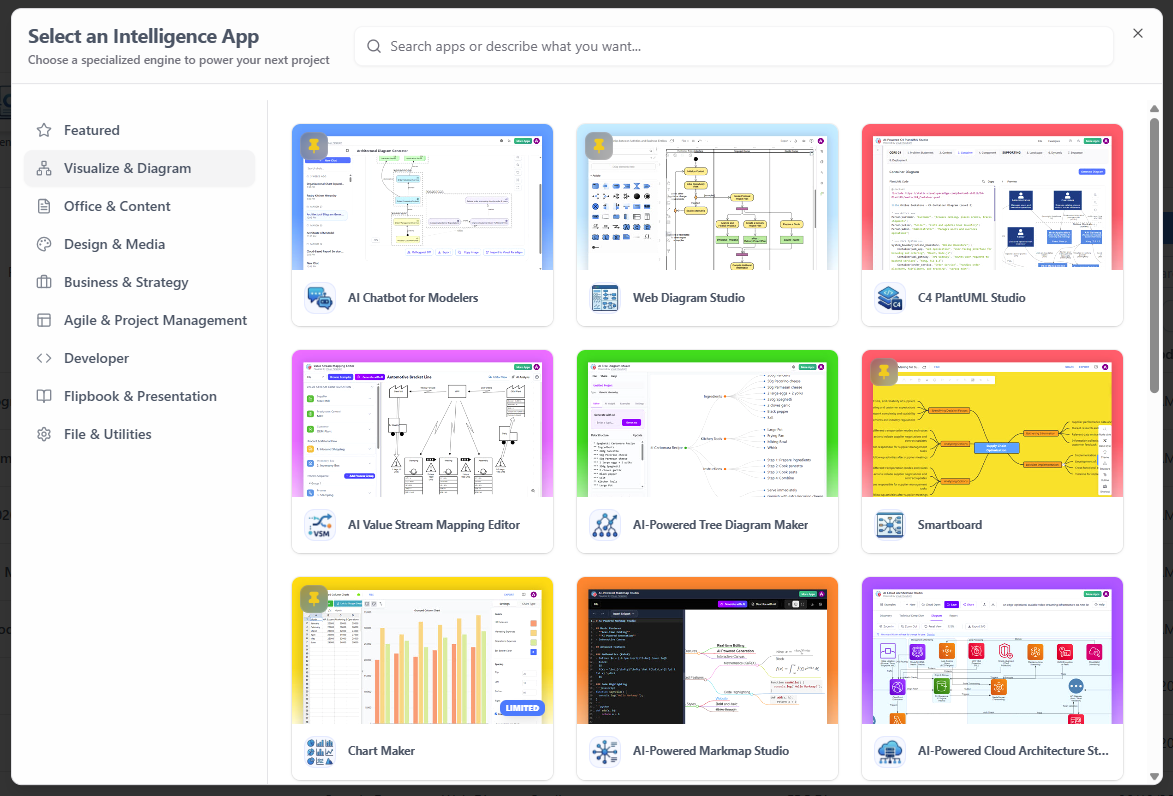
The platform provides a categorized dashboard hosting over 100 specialized apps—spanning advanced system modeling, agile planning, business infographics, and strategic management. Exploring and launching the exact tool you need is now just a single click away.
Streamlined Creation Workflow
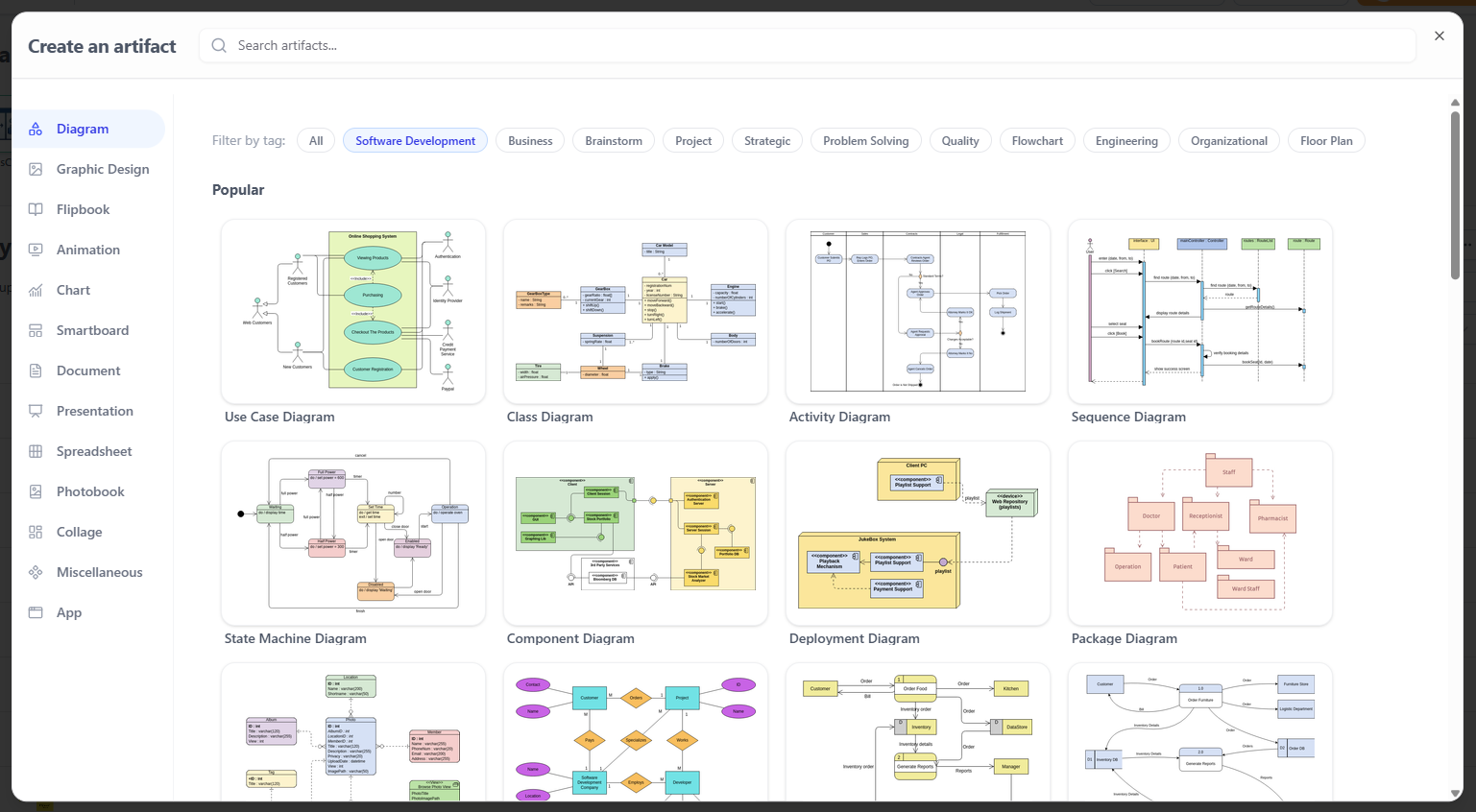
A centralized “Create” menu allows you to instantly spin up any diagram or visual artifact from one place, removing the friction of navigating deep sub-menus or opening different standalone applications.
Supercharging Agile Workflows with an AI Approach
Perhaps the most transformative aspect of upgrading to the Unified Platform is its deep integration of generative AI. Rather than treating AI as an isolated add-on, Visual Paradigm has embedded it directly into the creative and modeling workflow, dramatically reducing the time from concept to deliverable:
-
VPasCode (Text-to-Diagram): Accelerate your UML and architecture modeling by describing what you want to visualize in natural language. The AI generates the corresponding diagram automatically, allowing architects to focus on system logic rather than syntax.
-
AI Presentation Studio: Instantly transform raw architectural bullet points, sprint retrospective notes, or product strategies into polished, professionally designed presentations for stakeholders.
-
AI App Studio: Rapidly prototype and build functional applications from textual descriptions or rough sketches, bridging the gap between system design and tangible product delivery.
Real-World Scenarios: Bridging Desktop Modeling and Agile Execution

If you are primarily a Visual Paradigm Desktop user, embedding the Unified Platform directly into your client eliminates the context-switching that slows down complex projects.
Scenario 1: Connect Heavy System Modeling with Product Requirements
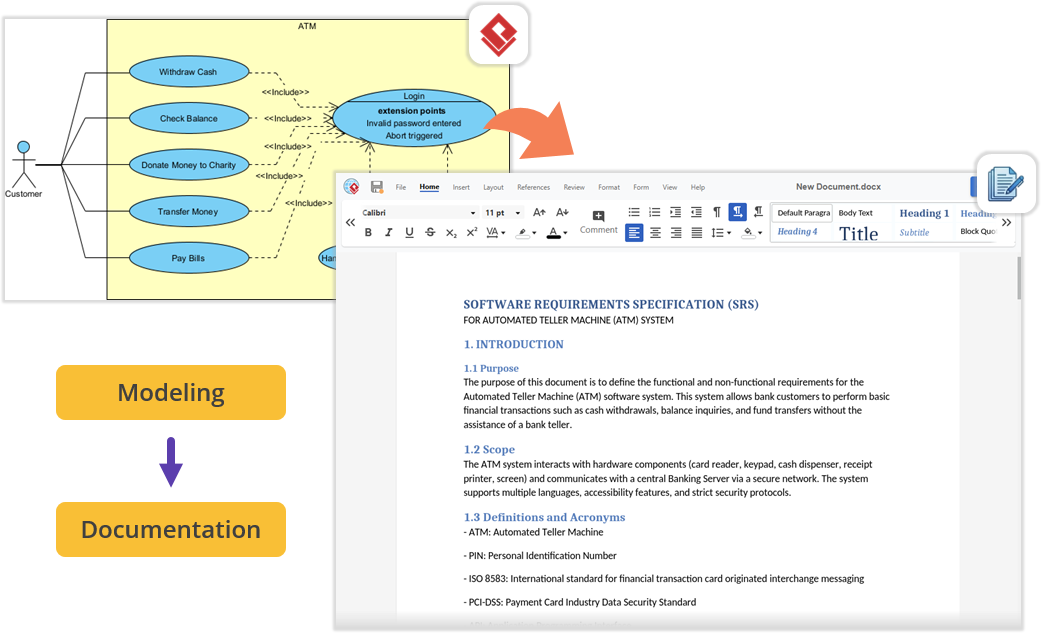
Imagine you are architecting a new software module using UML inside Visual Paradigm Desktop. Once the technical models are complete, you need to write the comprehensive Product Requirement Specification (PRD). Instead of minimizing Visual Paradigm and exporting image files, you can simply open the embedded Unified Platform. From there, launch the Document Editor app to write your requirements documentation right next to your active modeling environment.
Scenario 2: Effortless Documentation via Pipeline and OpenDocs
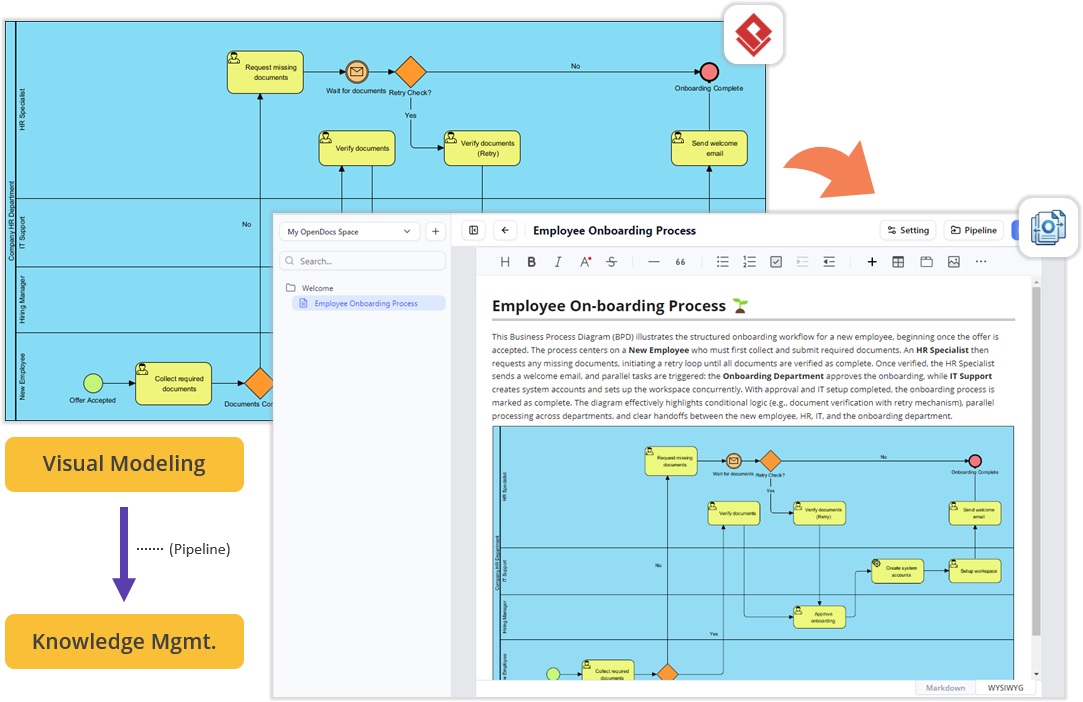
For teams looking to streamline technical documentation, the flow between your desktop workspace and cloud features is now frictionless. You can build your diagrams locally in VP Desktop and send them to the cloud-based Pipeline. Next, switch over to the OpenDocs app within the Unified Platform panel. In the OpenDocs editor, you will find your Pipeline pane waiting for you. You can write your manuals or project guides and simply drag-and-drop your desktop-generated diagrams directly into the document canvas.
Scenario 3: Supercharge Projects with Agile and Management Tools
Software development requires far more than just architectural diagrams; it requires project management, scheduling, and team alignment. The Unified Platform instantly unlocks access to a massive library of specialized PM and Agile applications for desktop users. Within the same interface where you manage your codebase models, you can now jump into apps dedicated to Stakeholder Management, generate Development Plans, build interactive Gantt Charts, map out a RACI Matrix, or even design a prototype site using the Website Builder.
How to Access and Upgrade Your Workflow
Getting started with the new ecosystem is incredibly straightforward.
For Visual Paradigm Online Users
-
Log into your VP Online account at: https://online.visual-paradigm.com/login.jsp
-
Upon successful login, you will automatically be redirected to the new Unified Platform dashboard.
-
You can also bookmark and visit the platform directly at any time by going to: https://online.visual-paradigm.com/unified-platform/
For Visual Paradigm Desktop Users
-
Ensure you are logged in: To see the Unified Platform menu, you must first connect your desktop application to your cloud repository. If you haven’t logged in yet, go to the main menu and select Team / Unified Platform > Select Repository and enter your VP Online credentials.
-
Open the Platform: Once logged in, simply navigate to Team / Unified Platform > Unified Platform in the main menu.

-
An embedded browser will open directly inside your workspace, revealing the centralized cloud drive and your entire app ecosystem.
Conclusion
The transition from rigid, siloed UML and MDA practices to a fluid, Agile-driven methodology no longer means sacrificing architectural rigor for speed. The Visual Paradigm Unified Platform proves that enterprise modeling and agile collaboration can not only coexist but actively amplify one another. By centralizing data, unifying desktop and cloud environments, and leveraging the raw power of generative AI, Visual Paradigm has created an ecosystem that respects the modern reality of software development.
Whether you are an enterprise architect mapping complex systems, a product manager defining agile roadmaps, or a developer executing sprint tasks, the Unified Platform provides the tools to break down silos, accelerate production, and foster true cross-functional collaboration. As the platform continues to evolve with advanced AI capabilities and granular project permissions, it stands as the definitive solution for teams ready to future-proof their visual productivity and embrace the next generation of agile enterprise architecture.
References
-
Visual Paradigm Unified Platform: Project Management UI Enhancements: Details on project management interface improvements.
-
Introducing Visual Paradigm 18.1: A New Era of Unified Ecosystems and AI-Driven Innovation: Overview of version 18.1’s unified ecosystem and AI capabilities.
-
Visual Paradigm Official Website: The main hub for Visual Paradigm products and resources.
-
Visual Paradigm Online: Unified Platform: The cloud-based entry point for the Unified Platform.
-
Visual Paradigm Unified Platform: Quick Introduction: A beginner-friendly guide to getting started.
-
Announcing the All-New Visual Paradigm Unified Platform: The official launch announcement for the Unified Platform.
-
Visual Paradigm Desktop Product Updates: Latest updates and enhancements for the desktop application.
-
Visual Paradigm Updates Hub: The central repository for all release notes and product updates.
-
Sync AI Diagram to OpenDocs Pipeline Guide: Guide on syncing desktop diagrams to cloud documentation.